Search in Classifieds
Search in Groups
Search in Polls
Search in Members
Search in Members
Search in News
Search in Polls
Search in Businesses
Search in Contests
Search in Events
Search in Music Albums
Search in Music Songs
Search in Quotes
Search in Site Team
Search in Jobs
Search in Products
Search in Products
5 minutes, 31 seconds
-24 Views 0 Comments 0 Likes 0 Reviews
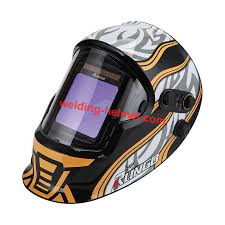
Welding arcs generate intense visible light together with ultraviolet and infrared radiation that can damage eyes and skin within moments of exposure. Protective equipment must therefore block these invisible wavelengths without interruption from the first second of use until the final inspection of the joint. The auto tint welding mask incorporates dedicated filter layers that stop ultraviolet and infrared energy in both the light resting state and the darkened working state so that protection never depends on the tinting action alone. At welding-helmet production lines managed by the RLINGD organization this permanent radiation barrier forms a core design requirement that accompanies every responsive filter cartridge. How does the filter achieve continuous shielding while still allowing clear viewing of the workpiece before the arc strikes?
The construction places specialized interference coatings on the optical glass or polycarbonate substrate of the filter cartridge. These coatings reflect and absorb ultraviolet and infrared wavelengths across a broad spectrum while the liquid crystal layers handle only the visible light that needs adjustment for comfort. When the sensors detect an arc the liquid crystals reorient to reduce visible transmission yet the radiation blocking layers remain fully engaged. The result is steady defense against the wavelengths that cause photokeratitis and thermal injury even if the operator momentarily positions the torch in bright ambient light or works near reflective surfaces. An Auto Tint Welding Mask relies on this dual-layer approach to keep radiation protection independent of the visible shade change.
Power arrangements support this constant readiness. Solar cells and a compact battery maintain the electronic controls that manage shade selection sensitivity and delay without affecting the passive radiation filters. Because the ultraviolet and infrared protection operates independently of battery status the operator retains full coverage during any brief power fluctuation. Shade controls allow matching of the visible darkness to the process in use while the radiation layers stay fixed at a protective level that meets established industrial criteria for arc welding environments.
Cover plates on the outer and inner faces of the cartridge serve as replaceable barriers against spatter and abrasion. These plates preserve the integrity of the primary filter surfaces so that the radiation coatings continue to function without degradation from surface contamination. Routine wiping with a soft dry cloth removes dust and film that could otherwise scatter light or reduce clarity yet the underlying protection remains intact. Storage away from extreme heat and moisture further supports the longevity of both the electronic and optical components.
In fabrication shops construction sites and maintenance areas the continuous radiation barrier supports confident positioning of the electrode or torch. Operators can align the joint under the light state knowing that ultraviolet and infrared energy is already filtered. Once the arc forms the visible shade adjusts while the same radiation layers continue their work. Dedicated grind or cut modes keep the visible state light for those tasks yet the radiation protection stays active so that incidental arcs nearby do not create exposure risk. The Auto Tint Welding Mask therefore maintains its radiation barrier across every mode selected by the operator.
Maintenance routines stay simple and effective. A quick check of sensor windows for blockage confirmation of the correct operating mode and inspection of cover plates for cracks form a short pre-shift sequence. Should the visible tint fail to respond the radiation filters continue to operate which gives the operator a margin of safety while the electronic issue receives attention. Replacement of cover plates at regular intervals keeps the optical path clear and the radiation coatings free from cumulative damage.
Across industries that depend on consistent arc processes the combination of automatic visible adjustment and permanent ultraviolet infrared filtering supports both productivity and operator comfort through extended shifts. Teams reviewing complete protective assemblies find practical value in systems that integrate these layers into a single cartridge. Further information on available configurations and technical characteristics appears at https://www.welding-helmet.com/product where the RLINGD selection includes units suited to varied fabrication and repair requirements.
We are a close community to help to meet and greet new people.
We are a secure community with 5000+ active members who help you with your queries, post new updates and grow your network.

Share this page with your family and friends.