Search in Classifieds
Search in Groups
Search in Polls
Search in Members
Search in Members
Search in News
Search in Polls
Search in Businesses
Search in Contests
Search in Events
Search in Music Albums
Search in Music Songs
Search in Quotes
Search in Site Team
Search in Jobs
Search in Products
Search in Products
7 minutes, 44 seconds
-72 Views 0 Comments 0 Likes 0 Reviews
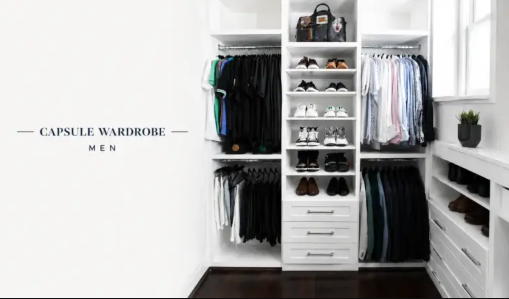
Getting dressed shouldn't feel like a daily negotiation with your closet. That's the whole idea behind a capsule wardrobe men everywhere are starting to adopt — a small, deliberate set of clothes that all work together, so you're never standing there at 7 a.m. wondering what goes with what.
It's less about owning fewer things for the sake of it and more about owning the right things. Once you strip away the pieces you never reach for, what's left is a closet that actually earns its space.
A lot of people hear "capsule wardrobe" and picture some extreme minimalist with ten shirts and nothing else. That's not quite it. The real definition is simpler: a curated collection of clothing where nearly every piece can be mixed with nearly every other piece.
Instead of dozens of outfits that only work in one specific combination, you get a wardrobe where a button-down shirt pairs equally well with chinos, dark jeans, or a blazer. The concept dates back to the 1970s, when a London boutique owner first coined the term, and it later gained traction through designers who applied it to workwear collections.
Decision fatigue is real, and clothing is one of those small daily choices that quietly drains energy if you let it. Building a wardrobe around versatility instead of volume cuts that friction out almost entirely.
There's also a financial angle — buying fewer, better-made pieces tends to cost less over time than constantly replacing cheap items that wear out fast. And honestly, a tighter wardrobe just looks more intentional. When everything in your closet is something you'd actually wear, you stop reaching past clothes you regret buying.
You don't need a rulebook that tells you to own exactly three suits or two pairs of the same shoe. What matters more is covering the basics well. A few neutral tees, a couple of well-fitted button-downs, one or two pairs of trousers that aren't jeans, a solid pair of dark denim, a lightweight jacket, and shoes that work for both casual and slightly dressed-up occasions — that's roughly the skeleton.
From there, you build outward based on your actual routine, not someone else's idea of a "complete" wardrobe. Someone who works from home needs a different mix than someone commuting into an office five days a week, and that distinction matters more than most guides admit.
Here's something that gets glossed over a lot: a capsule wardrobe only works if the clothes actually fit. Two shirts that fit you properly will outperform six that don't, every single time. Pay attention to shoulder seams, sleeve length, and how trousers sit at the waist — these small details are what separate "put together" from "just wearing clothes."
Fabric quality plays a similar role. Natural fibers like cotton and wool tend to age better, breathe more comfortably, and hold their shape longer than synthetic blends, which matters a lot when you're wearing the same handful of pieces on repeat.
You don't need to replace your entire closet in one weekend. Start by sorting what you already own into "keep," "donate," and "maybe," then notice the gaps. Maybe you've got plenty of casual shirts but nothing that works for a slightly formal dinner. Fill those specific gaps first instead of buying broadly.
Thrift stores and end-of-season sales are genuinely useful here — a well-made blazer secondhand often beats a cheap new one. Over a few months, the wardrobe fills itself out naturally, without the financial hit of buying everything at once.
A capsule wardrobe isn't a one-time project; it needs occasional upkeep. Every season or so, take stock of what's getting worn and what's just sitting there.
If something hasn't been touched in months, it probably doesn't belong. Swap in new pieces only when they genuinely replace or complement something, not just because a sale caught your eye. This kind of light, regular editing is what keeps the system from slowly bloating back into a cluttered closet.
How many items should a men's capsule wardrobe have?
There's no fixed number, but most versions land somewhere between 25 and 40 pieces, including shoes and outerwear. What matters more than the count is how many outfits those pieces can create together.
Is a capsule wardrobe only for minimalists?
Not at all. It's really a system for reducing waste and decision-making, which benefits anyone, whether you're minimalist by nature or just tired of a messy closet.
Can I still have personal style with fewer clothes?
Yes — arguably more so. With fewer pieces, each one gets chosen deliberately, which tends to sharpen your style rather than dilute it.
How often should I update my capsule wardrobe?
A light review every three to four months works well, adjusting for season changes and wear-and-tear rather than trends.
None of this requires a dramatic closet overhaul or a strict set of rules pulled from someone else's lifestyle. It's about paying attention to what you actually wear, fitting your clothes properly, and choosing pieces that work hard across different situations.
Guides like the one on capsuleewardrobe.com exist because this shift genuinely changes how men experience getting dressed — less stress, less clutter, and a closet that finally makes sense.
We are a close community to help to meet and greet new people.
We are a secure community with 5000+ active members who help you with your queries, post new updates and grow your network.

Share this page with your family and friends.