A well-built dirt road can make a major difference when you own rural property, farmland, wooded acreage, or a homesite in the North Georgia mountains. Whether you need a new driveway, access road, private lane, or improved route through your property, proper planning and materials are essential. In Dahlonega, GA, changing terrain, heavy rainfall, and sloped properties can make road construction more challenging than it may appear.
Professional Dirt Road Installation Dahlonega GA services can help create an access road that is practical, durable, and designed around the land. Choosing the right aggregate is also important. One material often considered for drainage and construction projects is No. 57 stone, a clean, uniformly sized crushed stone that can serve several useful purposes around a property.
Why Proper Dirt Road Installation Matters
A dirt road is more than simply clearing a path and spreading soil. Without proper preparation, a new road can quickly develop ruts, soft areas, standing water, and erosion problems.
A properly installed dirt road begins with an assessment of the property. The contractor may consider the slope, soil conditions, drainage patterns, vegetation, existing access points, and the expected amount of traffic. These factors help determine how the road should be laid out and what materials may be appropriate.
Dahlonega properties can have uneven terrain and steep grades, so road placement deserves careful attention. A road that follows the natural characteristics of the property can often be easier to maintain than one that ignores the existing landscape.
Preparing the Site
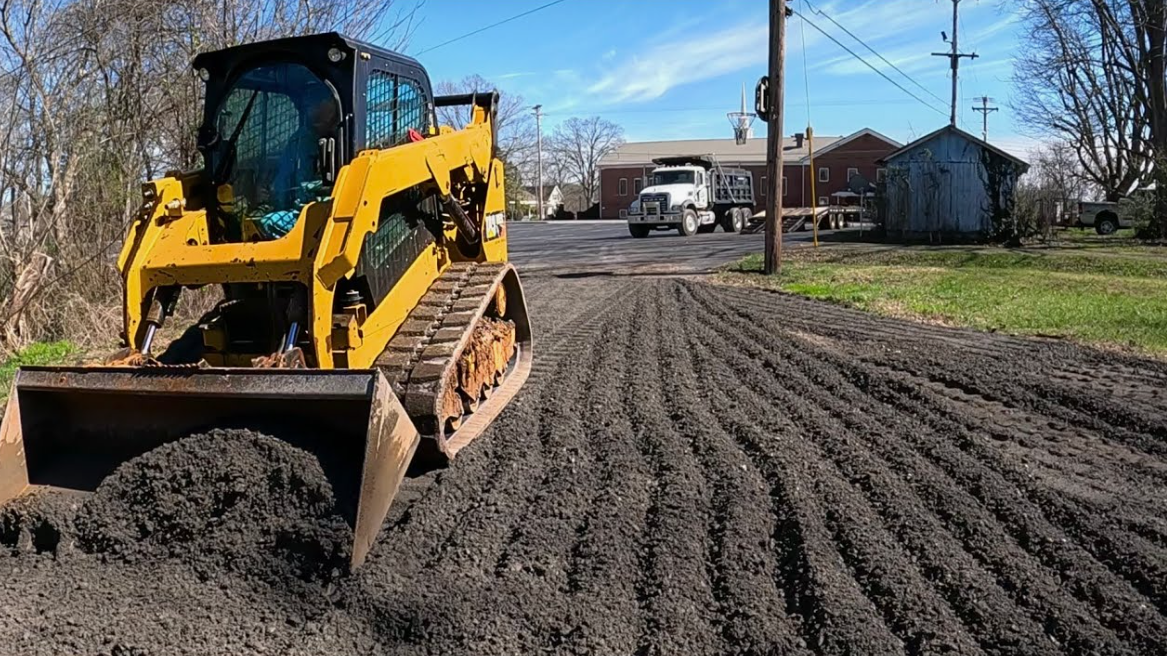
Site preparation is one of the most important stages of road installation. Depending on the property, this may involve clearing brush, removing trees or other obstacles, grading the route, and addressing unstable soil.
The roadbed needs to provide a reasonably stable foundation for vehicles. If soft soil or organic material remains beneath the driving surface, the road may become weak when exposed to rain and repeated traffic.
Grading helps create the desired slope and surface shape. Proper grading also plays an important role in moving water away from the road rather than allowing it to collect in low spots.
For rural properties, thoughtful preparation can make the finished road more useful while reducing future maintenance requirements.
The Importance of Drainage
Water is one of the biggest challenges facing unpaved roads. Rain can wash soil away, create channels, and leave portions of the road muddy or unstable.
Good drainage should therefore be part of the road design from the beginning. Depending on the location, drainage solutions may include ditches, culverts, appropriately shaped road surfaces, and aggregate materials that help water move through or away from problem areas.
This is particularly relevant in Dahlonega, where significant rainfall and hilly terrain can affect unpaved roads. A road that looks excellent immediately after installation may still experience problems if water has nowhere to go.
By addressing drainage during installation rather than after damage occurs, property owners can potentially avoid repeated repairs.
What Is No. 57 Stone?
No. 57 stone is a commonly used type of crushed stone. It generally consists of clean, washed or screened aggregate with relatively uniform particle sizes. The exact grading and specifications can vary by supplier, so property owners should confirm the material specifications before ordering.
Because it contains little to no fine material compared with some other aggregates, No. 57 stone allows water to move through the spaces between the individual stones. This characteristic makes it useful for certain drainage and construction applications.
No. 57 stone may be used around driveways, drainage areas, culverts, retaining structures, foundations, and other landscape or construction projects.
However, it is important to understand that not every aggregate is appropriate for every part of a dirt road. The best material depends on the soil, traffic, drainage requirements, grade, and intended use of the road.
How No. 57 Stone Can Support Property Projects
When used in the right application, No 57 stone can provide a durable aggregate surface or drainage layer. Its open structure can be useful where water movement is a priority.
For example, it may be used around culvert outlets or drainage areas where water needs a stable surface. It can also be helpful in locations where erosion is a concern.
For an access road, a contractor may recommend combining different aggregate sizes or materials rather than relying on one stone throughout the entire road. Finer material can help fill voids and create a more compact surface, while larger or cleaner stone may be useful in areas requiring drainage and structural support.
The goal is to create a road system suited to the specific property rather than simply choosing a material because it is commonly used elsewhere.
Dirt Roads for Rural and Residential Properties
Dirt roads are particularly useful for rural landowners. A property may need an access route before construction begins, or an existing road may need to be improved before heavy equipment, trucks, or regular vehicles can use it.
A new road can provide access to a future home site, barn, workshop, hunting area, pasture, timberland, or other part of the property.
For larger parcels, a well-planned road can also make it easier to move equipment and maintain different areas of the land. The route should be selected carefully so it provides practical access without creating unnecessary grading, drainage, or erosion problems.
Improving an Existing Dirt Road
Not every property needs a completely new road. Sometimes an existing dirt road simply needs repair or improvement.
Common problems include deep ruts, potholes, loose soil, standing water, washouts, and areas that become difficult to drive after heavy rain.
Improvement work may involve reshaping the road, adding suitable aggregate, improving drainage, filling damaged areas, or rebuilding portions of the roadbed. The appropriate approach depends on what caused the problem.
For example, repeatedly adding stone to a section that washes out after every storm may not solve the underlying issue. Improving drainage first could provide a more lasting solution.
Choosing the Right Contractor in Dahlonega
When considering Dirt Road Installation Dahlonega GA, look for a contractor who understands local terrain and has experience working with grading, excavation, drainage, and aggregate materials.
Ask about the planned roadbed, drainage strategy, aggregate selection, grading process, and expected maintenance. A reliable contractor should be able to explain why particular materials are being recommended for your property.
It is also helpful to discuss the type of traffic the road will receive. A private driveway used by passenger vehicles has different requirements from an access road used by dump trucks, construction equipment, farm machinery, or logging vehicles.
Plan for Long-Term Performance
A dirt road requires some maintenance, even when it is installed correctly. Heavy rain, changing weather, vehicle traffic, and natural erosion can affect the surface over time.
Periodic grading can help correct ruts and uneven areas. Drainage features should also be inspected regularly, especially before and after periods of heavy rainfall.
Keeping ditches and culverts clear can help water move away from the road. Promptly repairing small problem areas may also prevent them from becoming more expensive failures.
The best dirt road installation is therefore not simply about creating a usable surface today. It is about developing an access route that can continue serving the property for years.
Conclusion
A properly designed dirt road can add significant functionality to rural property in Dahlonega, GA. From providing access to a new homesite to improving transportation across a large parcel, a durable road starts with good planning, proper grading, stable materials, and effective drainage.
No. 57 stone can be a useful material for drainage and certain aggregate applications, but the right road-building materials should always be selected based on the property's soil, terrain, traffic, and water-management needs.
If you are planning a new access road or improving an existing one, professional Dirt Road Installation Dahlonega GA services can help you evaluate the site and develop an approach suited to your property. With proper preparation and the right materials, your dirt road can provide dependable access while standing up better to North Georgia's challenging weather and terrain.


 Search in Classifieds
 Search in Groups
 Search in Polls
 Search in Members
 Search in Members
 Search in News
 Search in Businesses
 Search in Contests
 Search in Events
 Search in Music Albums
 Search in Music Songs
 Search in Quotes
 Search in Site Team



Share this page with your family and friends.