A properly installed door lock helps control access to a home, office, rental property, or other building. A lock must fit the door, work smoothly, and keep the door closed when it should. Poor installation can cause sticking, loose hardware, alignment problems, or difficulty turning the key. Door lock installation requires attention to the door material, lock type, frame, and existing holes.
Understanding Door Lock Types
Different doors need different lock systems. A standard residential door may use a knob lock, lever lock, deadbolt, or a combination of these options. Exterior doors often need stronger hardware because they protect the main entry points of a property.
Deadbolts provide a solid locking point because the bolt extends into the door frame. Single cylinder deadbolts use a key outside and a thumb turn inside. Double cylinder models use a key on both sides. Local building and fire safety rules can affect which type fits a particular location.
Smart locks offer another option. These systems can use a keypad, phone, fingerprint reader, or electronic code. They still require correct physical installation. The electronic features cannot compensate for a poorly aligned door or weak frame.
Why Proper Installation Matters?
A door lock does more than keep a door closed. It forms part of the complete entry security system. The lock, strike plate, door, hinges, and frame must work together.
A lock that sits too high or low can make the latch miss the strike plate. A bolt that does not enter the frame fully may reduce the effectiveness of the locking system. Loose screws can also allow hardware to shift over time.
Professional door lock installation can help address these problems during installation instead of leaving them for later repairs.
Two important factors deserve attention:
- Correct alignment: The latch and bolt should line up with the strike plate and enter the frame without force.
- Proper hardware selection: The lock should match the door thickness, backset, bore size, and intended use.
Choosing the Right Door Lock
The right lock depends on the door and the level of access control needed. A bedroom door may need privacy hardware, while a front entry door needs stronger security hardware. An office may require a lock that supports controlled access between employees and visitors.
Exterior doors should receive hardware designed for exterior use. Interior hardware may not withstand outdoor exposure or frequent use.
Homeowners should also consider who needs access. Traditional keyed locks work well when a small number of people need keys. Keypad locks can make access easier when several people need entry without physical keys.
Preparing for Lock Installation
A proper installation begins with an inspection. The installer checks the existing lock, door thickness, frame condition, and location of the current holes. If the door already has suitable holes, the new lock may fit without major changes.
Older doors can present different challenges. Previous repairs may leave oversized holes or damaged wood around the lock area. The frame may also contain an old strike plate that does not match the new hardware.
The installer may need to replace the strike plate or adjust its position. A secure installation should not depend on forcing the door closed.
Door Lock Replacement and New Installation
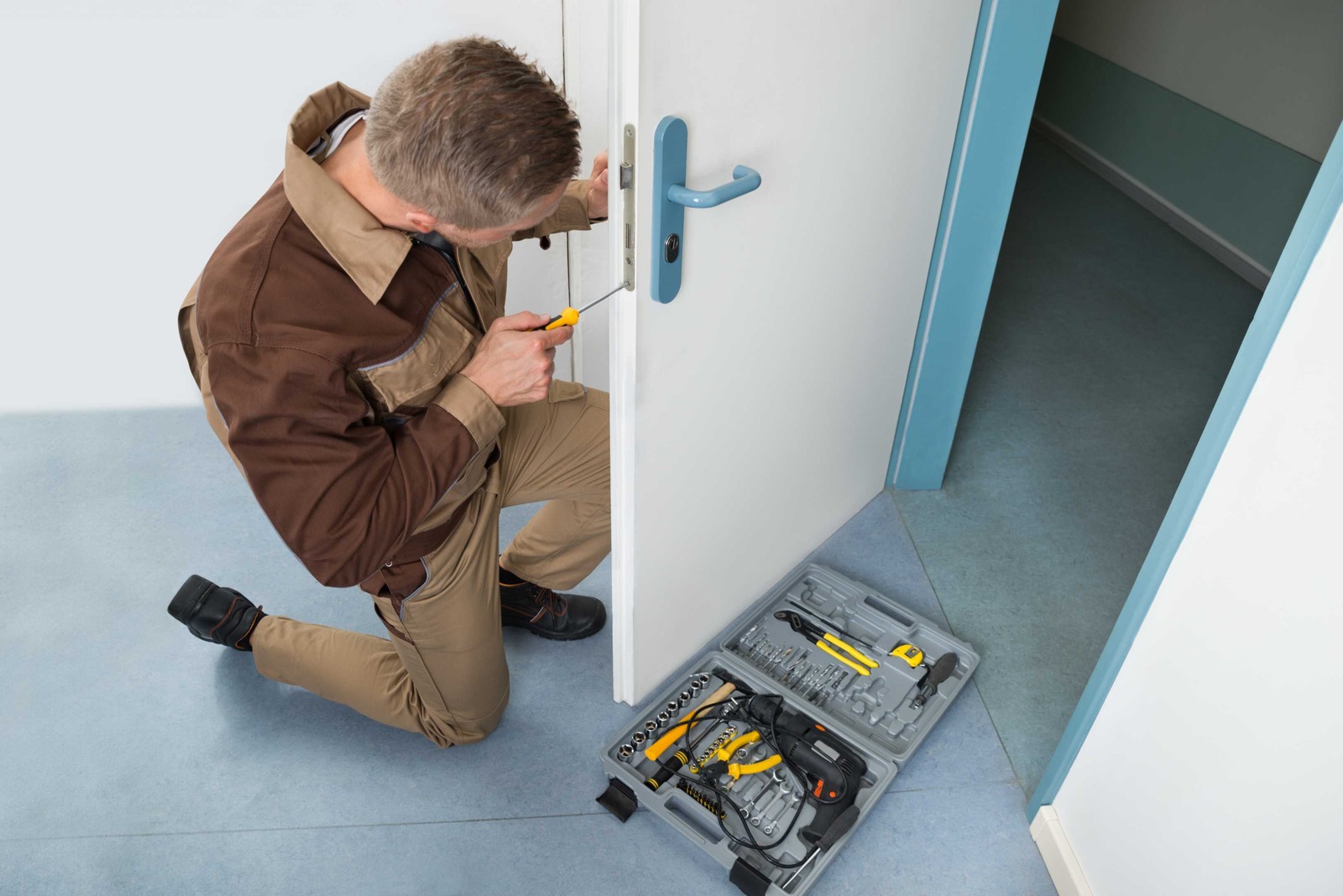
Door lock replacement usually starts by removing the existing hardware. The installer then checks the condition of the door and frame before fitting the new lock.
New door lock installation can require drilling when the door has no suitable bore holes. Accurate measurements matter because even a small error can place the lock in the wrong position.
The latch should face the correct direction, and the exterior and interior portions of the lock should sit evenly against the door. The screws should hold the hardware firmly without damaging the door.
After installation, the lock should be tested several times with the door open. The installer can then test it with the door closed to confirm that the latch and deadbolt enter the strike correctly.
Common Door Lock Installation Problems
Some lock problems start during installation. A lock can appear functional while still having alignment issues.
Common problems include:
- A deadbolt that requires excessive force to turn
- A latch that does not fully enter the strike plate
These issues can become worse as the door settles or changes slightly with weather and normal use. Exterior doors can expand or contract as temperature and moisture change.
A properly adjusted lock should operate smoothly. The key should turn without unnecessary force, and the door should close without pushing or pulling against the lock.
Improving Entry Door Security
Lock installation also creates an opportunity to inspect the entire entry point. A strong lock may provide limited protection if the door frame is weak or the strike plate is poorly secured.
Longer screws can sometimes provide better attachment when appropriate for the door and frame construction. The installer should choose hardware that suits the structure instead of using the same method for every door.
Homeowners should also inspect other exterior doors, including back doors, side doors, and garage entry doors. These locations can require the same level of attention as the main entrance.
Rekeying After Lock Installation
A new lock is not always necessary when someone has an existing lock but needs to control who has access. Rekeying changes the internal configuration of the lock so old keys no longer operate it.
Rekeying can help after a tenant moves out, an employee leaves a business, or a key becomes difficult to account for. The existing lock hardware can remain in place when its condition and design make rekeying suitable.
A locksmith can determine whether rekeying or complete lock replacement makes more sense for the door.
Maintaining Newly Installed Locks
Regular maintenance can extend the useful life of door hardware. Homeowners should watch for loose screws, stiff operation, damaged keys, and changes in door alignment.
A lock that suddenly becomes difficult to operate may indicate a problem with the door rather than the lock itself. Hinges can loosen, frames can shift, and weather can affect wooden doors.
Avoid forcing the key when the lock becomes difficult to turn. Excessive force can damage the key or internal lock parts.
FAQs About Door Lock Installation
1. How long does door lock installation take?
Many standard residential locks can be installed within a short service visit. The exact time depends on the lock type, door condition, and whether new holes or frame adjustments are required.
2. Can a new lock be installed in an existing door?
Yes. Many replacement locks are designed to fit common existing door preparations. The installer should measure the door and existing holes before selecting the hardware.
3. Should I replace or rekey my door lock?
Rekeying can work when the existing lock remains in good condition. Replacement makes sense when the lock is damaged, outdated, worn, or unsuitable for the door.
4. Why does my new deadbolt feel difficult to turn?
Misalignment between the bolt and strike plate is a common reason. Door movement or frame problems can also create resistance.
5. Can smart locks be installed on existing doors?
Many smart locks fit common residential door preparations. Compatibility should be checked before installation because door thickness and existing hardware can vary.
Conclusion
Proper door lock installation helps create a reliable entry point for homes and businesses. Correct measurements, suitable hardware, proper alignment, and careful testing all contribute to smooth lock operation. When installation or replacement requires professional attention, Topstop Lockout LLC is the best company providing door lock installation services in Oregon, Ohio and surrounding areas. Professional assistance can help ensure the lock fits the door and operates as intended.


 Search in Classifieds
 Search in Groups
 Search in Polls
 Search in Members
 Search in Members
 Search in News
 Search in Businesses
 Search in Contests
 Search in Events
 Search in Music Albums
 Search in Music Songs
 Search in Quotes
 Search in Site Team



Share this page with your family and friends.