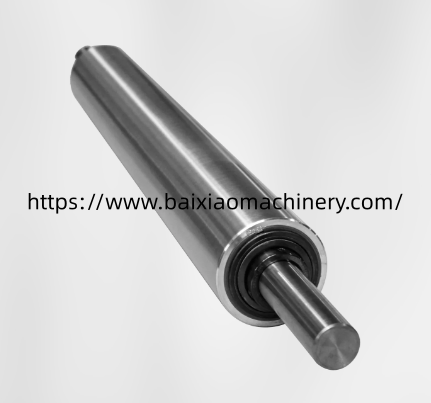
In converting, printing, packaging, and other web-processing applications, an Air Shaft can provide a practical way to secure and handle rolls of flexible materials during unwinding or rewinding. Instead of treating the shaft as a simple support component, equipment designers can view it as part of a coordinated roll-handling system. Its materials, expansion mechanism, structural arrangement, operating convenience, and visual finish can all influence how naturally it integrates with production machinery.
Material selection is an important starting point because the shaft operates under repeated mechanical movement and interacts directly with roll-handling equipment. Steel is commonly used for industrial shaft construction because it provides a solid structural foundation and can be machined into precise forms. Stainless steel can offer another option where corrosion resistance, surface cleanliness, or frequent cleaning is important.
The material used for expansion elements also deserves attention. Air-operated components need to respond reliably when pressure is introduced and released, so flexible materials must be selected with their working environment in mind. Seals, gripping elements, and other internal components should be compatible with the intended application. Considering the entire assembly rather than the central shaft alone gives buyers a more realistic understanding of product quality.
When choosing a shaft, application requirements should come before specific product features. The type of web material, roll characteristics, machine structure, production process, and loading method can all influence which shaft design is appropriate. Packaging film, paper, foil, textile materials, and other flexible webs may have different handling characteristics. A shaft selected for one process may not automatically be suitable for another.
Machine compatibility is another important purchasing consideration. The shaft must work naturally with the surrounding bearings, drive system, machine frame, and roll-handling mechanism. Buyers should also consider how the shaft will be installed and removed during routine production. If operators need to change rolls frequently, a design that supports convenient handling can contribute to a more efficient workflow.
The operating mechanism is central to the technology of an air-operated shaft. When compressed air enters the shaft, internal expansion elements can move outward to engage with the core of a material roll. Releasing the air allows the mechanism to return, making roll removal easier. This approach can provide controlled engagement without requiring complicated manual adjustment for every roll change.
Different expansion arrangements can be developed according to the application. Some designs focus on gripping through specific contact elements, while others use alternative structures to accommodate different core conditions. The important consideration is whether the mechanism creates secure engagement while allowing practical loading and unloading. A well-designed system should balance holding stability with operator convenience.
Manufacturing accuracy is closely related to technical performance. Shaft bodies need to maintain suitable alignment, while moving and sealing components need to be assembled consistently. Machining, welding, surface treatment, component fitting, and pressure-related testing can all form part of the manufacturing process. Quality control at these stages helps manufacturers maintain consistent behavior across different products.
Maintenance should also be considered before purchasing. An industrial shaft operates within a production environment where dust, adhesive residue, material fragments, and other contaminants may be present. Easy access to serviceable components can make inspection and cleaning more convenient. Seals and expansion elements should also be considered as part of the maintenance process because their condition can influence the effectiveness of the gripping mechanism.
User experience has a direct connection with production efficiency. Operators regularly interact with shafts during roll changes, machine preparation, cleaning, and maintenance. A design that is intuitive to load and release can reduce unnecessary effort during repetitive tasks. Clear operating procedures and accessible connection points can further improve the interaction between personnel and equipment.
Safety and confidence are also important aspects of user experience. A roll should remain securely engaged during normal operation, while the release process should be predictable when a production cycle is complete. Reliable mechanical interaction can reduce uncertainty for operators and help create a more controlled working environment.
Zhejiang Province, Ruian Baixiao Machinery Co., Ltd. develops conveyor and web-handling related machinery components, with manufacturing experience involving rollers, shafts, and other industrial equipment. Its product development approach demonstrates the importance of connecting component construction with the requirements of the complete machine. For equipment manufacturers and buyers, understanding a supplier's production experience and ability to support different applications can be useful when evaluating shaft solutions.
Design and appearance may not be the first concerns when selecting an industrial shaft, but they still have practical value. A clean surface finish can support easier maintenance, while carefully arranged components can make the equipment look more organized. Consistent finishing can also contribute to the overall appearance of a modern production line, particularly when machinery is visible to customers or visitors.
The shape and arrangement of the shaft should also support its intended function. Smooth transitions, accessible connection areas, and an organized external structure can make the component easier to integrate into surrounding machinery. For customized equipment, visual consistency between the shaft and other machine components can create a more cohesive appearance without compromising mechanical requirements.
For businesses evaluating roll-handling components, looking at materials, application compatibility, expansion technology, manufacturing control, maintenance access, operator interaction, and overall design can provide a more complete basis for selecting an appropriate solution. Zhejiang Province, Ruian Baixiao Machinery Co., Ltd. provides further information about its industrial rollers, shafts, and related machinery products through its official website: https://www.baixiaomachinery.com/


 Search in Classifieds
 Search in Groups
 Search in Polls
 Search in Members
 Search in Members
 Search in News
 Search in Businesses
 Search in Contests
 Search in Events
 Search in Music Albums
 Search in Music Songs
 Search in Quotes
 Search in Site Team



)


Share this page with your family and friends.