Chronic pain can be complex, persistent and deeply connected to a person's emotional, cognitive and nervous-system responses. For professional counsellors, social workers, psychologists and marriage & family therapists (MFTs), understanding the relationship between the brain, body and pain can provide valuable tools for supporting clients.
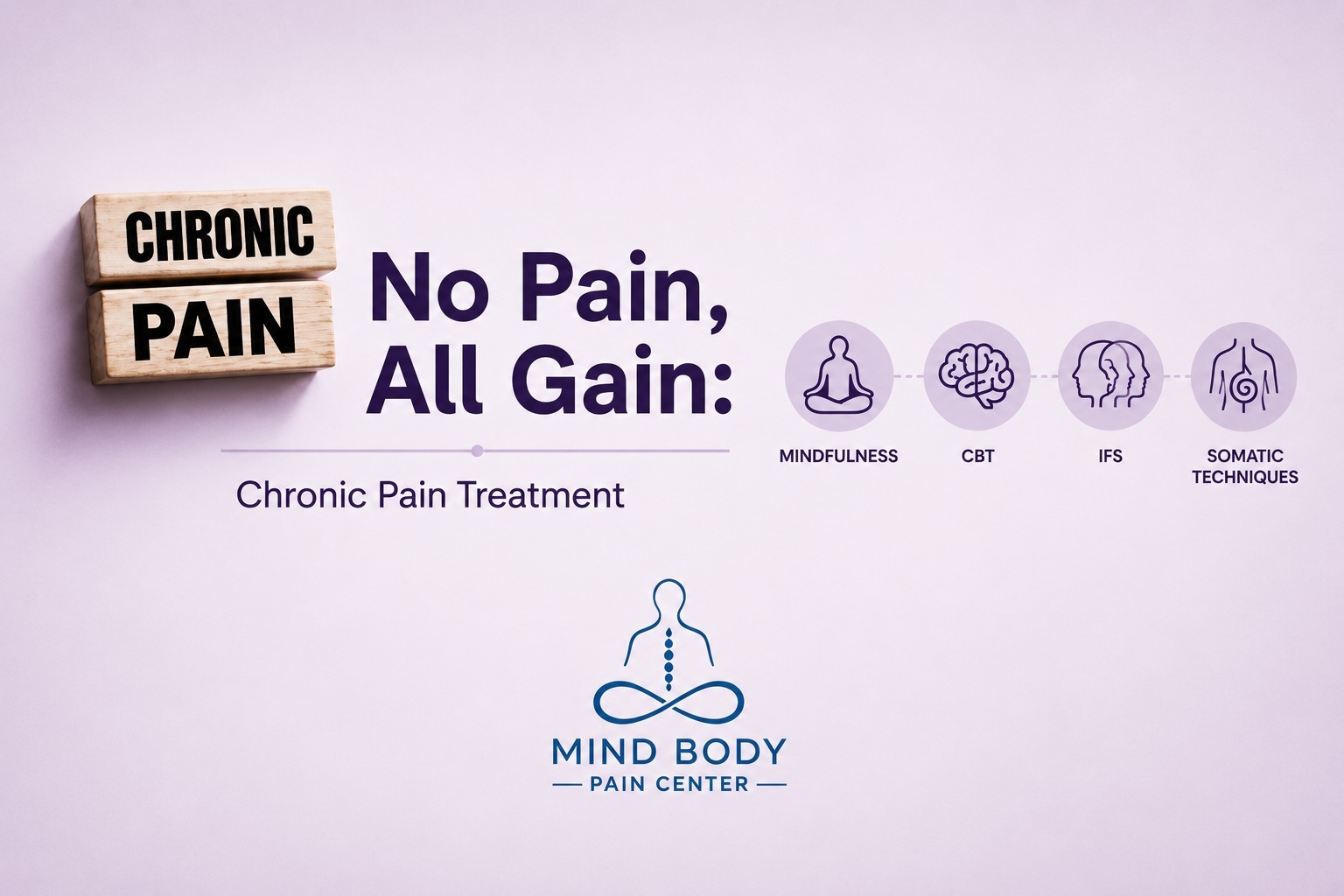
Modern approaches to chronic pain treatment increasingly recognise that pain is not simply a physical experience. The nervous system, thoughts, emotions, attention and learned responses can all influence how pain is experienced. This has led to growing interest in integrative approaches such as Mindfulness, CBT, Internal Family Systems (IFS), Somatic techniques and Pain Reprocessing Therapy (PRT).
Core Wellness' No Pain, All Gain: Mind-Body Chronic Pain Treatment training focuses on this mind-body framework and demonstrates practical approaches clinicians can use when working with clients experiencing chronic pain. The training covers neuroscience, neuroplasticity, the fear-pain cycle, somatic tracking, cognitive reframing, mindfulness-based pain reprocessing and IFS.
Understanding Chronic Pain Through a Mind-Body Lens
Chronic pain can continue even after an injury or tissue damage has healed. For clinicians, this can create a challenging treatment environment, particularly when clients have already tried multiple interventions without experiencing lasting relief.
A mind-body approach does not suggest that chronic pain is "all in someone's head". Instead, it recognises that pain is a real experience involving complex interactions between the brain, nervous system, body and environment.
Research discussed in the Core Wellness training highlights the role of neuroplasticity and the brain's danger-alarm system in persistent pain. Understanding these processes can help clinicians explain chronic pain to clients in a way that validates their experience while opening the door to new treatment strategies.
How Mindfulness Can Support Chronic Pain Treatment
Mindfulness encourages clients to observe present-moment experiences without immediately judging, resisting or reacting to them.
For someone experiencing chronic pain, mindfulness can help create greater awareness of sensations, thoughts and emotional reactions. Rather than automatically responding to pain with fear or avoidance, clients can learn to notice what is happening with greater curiosity.
Mindfulness-based strategies may be incorporated into therapy through:
-
Present-moment awareness
-
Breath-focused exercises
-
Non-judgemental observation
-
Awareness of physical sensations
-
Noticing thoughts associated with pain
-
Reducing automatic emotional reactions
Mindfulness is also included among the evidence-informed mind-body approaches covered in Core Wellness' chronic pain training.
The Role of CBT in Chronic Pain
Cognitive Behavioural Therapy (CBT) can help clients examine the thoughts, beliefs and behavioural patterns that may contribute to distress around chronic pain.
Pain itself can trigger thoughts such as:
"This will never get better."
"Something must be seriously wrong."
<"I can't do anything because of my pain."
These thoughts can increase fear, anxiety, avoidance and distress. CBT techniques can help clients identify unhelpful thinking patterns and develop more balanced interpretations.
Cognitive reframing is specifically identified as one of the mind-body techniques included in the Core Wellness course.
For clinicians, CBT can therefore become one component of a broader treatment plan that addresses both the client's experience of pain and their responses to it.
Internal Family Systems (IFS) and Chronic Pain
Internal Family Systems (IFS) provides another perspective for understanding difficult internal experiences.
Clients living with chronic pain may experience different emotional "parts" of themselves. One part may feel frightened about the pain, another may become frustrated or angry, while another may push the person to continue functioning despite exhaustion.
IFS can provide a framework for exploring these internal experiences with curiosity and compassion rather than judgement.
The Core Wellness chronic pain training incorporates IFS alongside other mind-body approaches. The course is led by Dr. Joseph Tropper, who is Level-2 IFS trained and integrates IFS with several other therapeutic modalities in his clinical and educational work.
Somatic Approaches to Chronic Pain
Somatic approaches focus attention on the relationship between physical sensations, emotions, nervous-system responses and behaviour.
Somatic tracking, for example, can help clients observe sensations with curiosity rather than automatically interpreting them as threatening. This can be particularly relevant when fear and pain have become closely connected.
The Core Wellness course teaches somatic tracking as one of the practical techniques clinicians can apply when working with chronic pain. Participants are also introduced to the neuroscience of pain and neuroplasticity to better understand why the nervous system can continue producing protective responses even after an original injury has healed.
Breaking the Fear-Pain Cycle
One important concept in chronic pain treatment is the fear-pain cycle.
Pain may lead to fear.
Fear may lead to increased monitoring and avoidance.
Avoidance can reduce activity and reinforce the perception that movement or sensation is dangerous.
This can contribute to increased distress and disability.
Helping clients understand this cycle can give therapists an opportunity to introduce alternative responses. Mindfulness, CBT, somatic tracking and pain reprocessing strategies can all contribute to a more comprehensive therapeutic approach.
Pain Reprocessing Therapy and Neuroplasticity
Pain Reprocessing Therapy (PRT) is another approach discussed in the Core Wellness training. PRT is based on the idea that some chronic pain can be influenced by learned neural pathways and protective responses.
The course references a randomised clinical trial published in JAMA Psychiatry examining PRT for chronic back pain.
For clinicians, understanding pain reprocessing can provide an additional framework for discussing persistent pain with clients and exploring how the brain interprets signals from the body.
Why This Training Matters for Mental Health Professionals
Chronic pain frequently affects more than physical functioning. It can influence mood, relationships, work, sleep, confidence and quality of life.
This makes chronic pain an important topic for:
-
Professional Counsellors working with clients experiencing anxiety, fear and emotional distress related to pain
-
Social Workers supporting clients and families affected by chronic health conditions
-
Psychologists providing evidence-informed psychological interventions
-
Marriage & Family Therapists (MFTs) addressing the effects of chronic pain on relationships and family systems
An integrative understanding can help clinicians recognise the interaction between physical sensations, thoughts, emotions, relationships and behaviour.
Building Practical Skills for Chronic Pain Work
Learning about chronic pain is only part of effective clinical training. Mental health professionals also need practical strategies they can adapt to individual clients.
The Core Wellness training includes live treatment demonstrations, allowing participants to observe the application of techniques such as somatic tracking, IFS and mindfulness-based approaches rather than simply learning the concepts theoretically.
The course currently offers 3 live CE contact hours and is available as a live in-person programme and via live interactive webinar. Core Wellness states that the programme is approved/recognised for relevant continuing education through several professional bodies, with regulatory boards remaining the final authority on CE acceptance.
Continuing Education for Clinicians
For mental health professionals who want to expand their understanding of chronic pain, mind-body treatment can be a valuable area of continuing education.
Core Wellness provides live and on-demand CE workshops across topics including CBT, Mindfulness, Internal Family Systems (IFS), Somatic approaches, trauma and chronic pain.
The goal is not to replace medical pain treatment, but to help mental health professionals understand how psychological and nervous-system processes can interact with the experience of chronic pain and how appropriate therapeutic interventions may complement multidisciplinary care.
Final Thoughts
Chronic pain requires clinicians to look beyond symptoms and consider the whole person. Mindfulness, CBT, IFS and Somatic approaches can offer different but complementary ways of understanding and responding to the complex relationship between pain, thoughts, emotions and the nervous system.
For professional counsellors, social workers, psychologists and MFTs, developing skills in mind-body approaches can expand their clinical toolkit and support more informed, compassionate conversations with clients living with chronic pain.
Frequently Asked Questions
1. What is a mind-body approach to chronic pain?
A mind-body approach recognises that chronic pain can involve interactions between physical sensations, the brain, nervous system, thoughts, emotions and behaviours. It may incorporate approaches such as mindfulness, CBT, somatic techniques, IFS and pain reprocessing.
2. How can Mindfulness help clients with chronic pain?
Mindfulness can help clients observe sensations, thoughts and emotions with greater awareness and less automatic reactivity. It may be used as one component of a broader therapeutic approach.
3. What is the role of CBT in chronic pain treatment?
CBT can help clients identify unhelpful thoughts and behaviours associated with pain and develop more balanced cognitive and behavioural responses. Cognitive reframing is included among the techniques taught in the Core Wellness chronic pain training.
4. Can IFS be used when working with chronic pain?
IFS can provide a framework for exploring different emotional responses or internal "parts" associated with pain, fear, frustration and coping. The Core Wellness programme incorporates IFS as part of its broader mind-body framework.
5. What are Somatic techniques for chronic pain?
Somatic techniques focus attention on physical sensations and the relationship between bodily experiences, emotions and nervous-system responses. Somatic tracking is one technique covered in the Core Wellness training.
6. What is Pain Reprocessing Therapy?
Pain Reprocessing Therapy (PRT) is an approach that focuses on how the brain and nervous system can contribute to persistent pain. It is discussed in the Core Wellness training alongside other mind-body approaches.
7. Who can benefit from chronic pain CE training?
Professional counsellors, social workers, psychologists and Marriage & Family Therapists (MFTs) may benefit from training that expands their understanding of chronic pain and mind-body interventions.
8. Does the Core Wellness chronic pain course offer CE credits?
Yes. The course page currently lists 3 live CE contact hours. Core Wellness also states that the programme has approvals or recognition for several professional groups; clinicians should confirm acceptance with their relevant licensing board.
9. Is the chronic pain training available online?
Yes. The course is offered as a live in-person programme and is also available via a live interactive webinar.
10. Where can professionals learn more about the chronic pain training?
You can view the full No Pain, All Gain: Mind-Body Chronic Pain Treatment course details, learning objectives, CE information and registration options on Core Wellness.


 Search in Classifieds
 Search in Groups
 Search in Polls
 Search in Members
 Search in Members
 Search in News
 Search in Businesses
 Search in Contests
 Search in Events
 Search in Music Albums
 Search in Music Songs
 Search in Quotes
 Search in Site Team



Share this page with your family and friends.