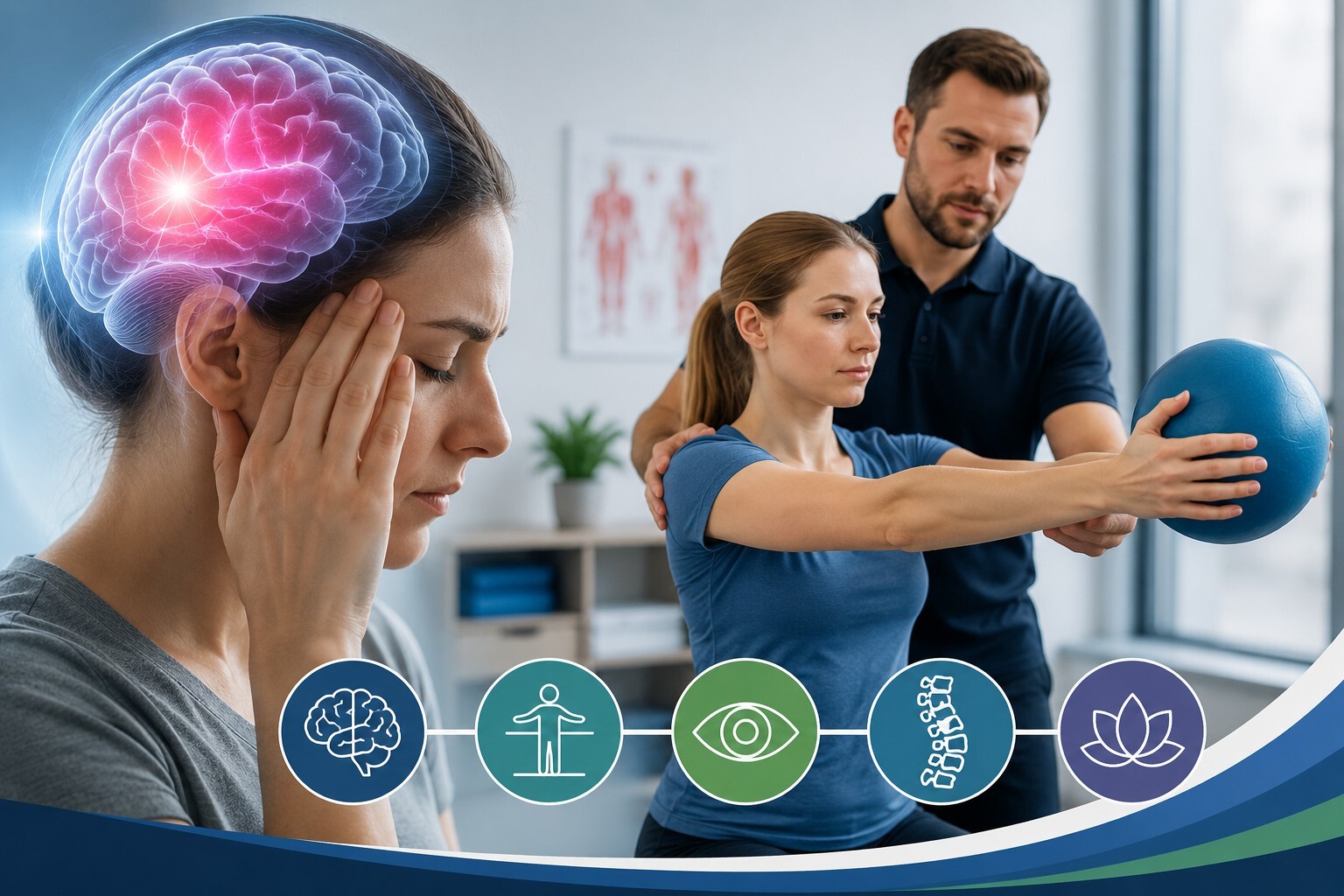
A concussion can affect more than just the first few days after an injury. Some people may continue to experience headaches, dizziness, difficulty concentrating, fatigue, sleep changes, or sensitivity to light and sound. Finding the right post concussion treatment can help support recovery and make it easier to manage symptoms safely.
Because every concussion is different, treatment should be based on the individual’s symptoms, medical history, and recovery progress. A healthcare professional can help determine the appropriate approach and whether additional evaluation is needed.
What Is a Concussion and How Does It Affect the Brain?
A concussion is a type of mild traumatic brain injury that can temporarily affect how the brain functions. It can happen after a blow or jolt to the head or from a force that causes the head and brain to move rapidly.
Symptoms can vary from person to person. Common symptoms may include:
-
Headaches
-
Dizziness or balance problems
-
Fatigue
-
Difficulty concentrating
-
Memory problems
-
Sensitivity to light or noise
-
Sleep disturbances
-
Mood or emotional changes
-
Nausea
Some symptoms appear immediately, while others may become noticeable later.
Understanding Post Concussion Treatment Options
Post concussion treatment generally focuses on managing symptoms while allowing the brain and body to gradually return to normal activities. Treatment is not necessarily the same for everyone.
Depending on the symptoms, a healthcare professional may recommend a combination of physical and cognitive rest, gradual activity, symptom management, and follow-up care.
The goal is to avoid activities that significantly worsen symptoms while gradually rebuilding normal daily function.
Rest and Gradual Return to Activity After a Concussion
Rest can be an important part of early concussion recovery. However, prolonged complete inactivity is not always appropriate. Once symptoms begin to improve, a gradual return to everyday activities may be recommended.
This may involve slowly increasing activities such as
-
Light daily activities
-
School or work-related tasks
-
Moderate physical activity
-
More demanding activities
-
Normal activities when appropriate
If symptoms noticeably worsen, it may be necessary to reduce activity and discuss the situation with a healthcare professional.
Managing Headaches and Other Concussion Symptoms
Headaches are among the commonly reported symptoms following a concussion. Other symptoms, including dizziness, sleep difficulties, and concentration problems, may also affect daily life.
Healthcare professionals can recommend appropriate symptom-management strategies based on the individual. Keeping track of symptoms can also help identify patterns and provide useful information during follow-up appointments.
It is important not to assume that every headache or symptom after a head injury is simply part of recovery. New, severe, or worsening symptoms should receive appropriate medical attention.
The Role of Physical Therapy in Concussion Recovery
Some people experience balance problems, dizziness, neck discomfort, or difficulties with movement after a concussion. In certain cases, a healthcare professional may recommend physical therapy.
A qualified therapist can assess specific problems and develop an individualized rehabilitation plan. Depending on the person's needs, rehabilitation may focus on balance, movement, coordination, or other functional concerns.
Cognitive Recovery and Support After a Concussion
Concussions can sometimes affect concentration, memory, reading, or other mentally demanding activities.
Returning to school, work, or other cognitive activities gradually may help prevent symptoms from becoming overwhelming. Shorter periods of concentration followed by appropriate breaks can be useful for some individuals.
If cognitive symptoms continue, professional assessment may help determine whether additional support or adjustments are needed.
When Should You Seek Medical Attention After a Concussion?
Most concussions improve with appropriate care, but certain symptoms require urgent medical evaluation.
Seek immediate medical attention for concerning symptoms such as
-
A worsening or severe headache
-
Repeated vomiting
-
Increasing confusion
-
Significant changes in alertness
-
Seizures
-
New weakness or difficulty speaking
-
Loss of consciousness or other concerning changes
When in doubt after a head injury, it is safer to seek professional medical advice rather than attempting to manage serious symptoms independently.
How Long Does Concussion Recovery Take?
Recovery time varies considerably. Some people recover relatively quickly, while others may experience symptoms for longer.
Factors such as the severity of symptoms, previous injuries, overall health, sleep, stress, and activity levels can influence recovery. Persistent symptoms should be discussed with a qualified healthcare professional rather than ignored.
How to Support a Healthy Concussion Recovery
Alongside professional guidance, several general habits may support recovery:
-
Maintain a consistent sleep schedule.
-
Stay appropriately hydrated.
-
Eat regular, balanced meals.
-
Gradually return to normal activities.
-
Avoid activities that significantly worsen symptoms.
-
Follow medical recommendations.
-
Keep track of persistent or changing symptoms.
-
Attend recommended follow-up appointments.
These measures should complement—not replace—professional medical care.
Final Thoughts on Post Concussion Treatment and Recovery
Finding an appropriate post concussion treatment approach is an important part of recovering after a concussion. Since symptoms and recovery timelines can vary, treatment should be individualized rather than based on a one-size-fits-all approach.
With appropriate evaluation, symptom management, gradual activity, and professional guidance, many people are able to work toward a safe return to their usual activities. If symptoms persist, worsen, or become concerning, consulting a healthcare professional is essential.Readmore Blogs


 Search in Classifieds
 Search in Groups
 Search in Polls
 Search in Members
 Search in Members
 Search in News
 Search in Businesses
 Search in Contests
 Search in Events
 Search in Music Albums
 Search in Music Songs
 Search in Quotes
 Search in Site Team



Share this page with your family and friends.