Search in Classifieds
Search in Groups
Search in Polls
Search in Members
Search in Members
Search in News
Search in Polls
Search in Businesses
Search in Contests
Search in Events
Search in Music Albums
Search in Music Songs
Search in Quotes
Search in Site Team
Search in Jobs
Search in Products
Search in Products
3 minutes, 53 seconds
-320 Views 0 Comments 0 Likes 0 Reviews
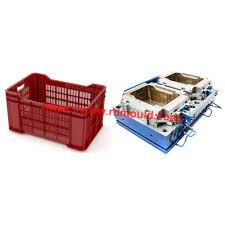
A specialized Household Mould Manufacturer concentrates on the specific demands of items used in daily home environments. Familiarity with wall thickness, surface finish, and ejection methods for kitchen, storage, and personal-care products allows the tooling to match actual handling conditions. Material flow behavior under typical injection parameters receives direct attention so the finished part releases cleanly and holds dimensional stability. What concrete gains appear when the maker focuses only on this product category?
Design knowledge centers on consumer interaction. Handles, lids, and containers experience repeated opening, stacking, and washing. The mould incorporates draft angles and parting lines that protect visible surfaces while allowing reliable demoulding. Texture and gloss levels follow common household expectations so the part looks consistent across production runs.
Material selection stays practical. Commodity plastics and common engineering grades used in household goods form the core experience. Shrinkage rates, cooling times, and gate positions are adjusted to the known behavior of these resins. The result is a cavity that fills uniformly and cools without excessive warpage under standard cycle conditions.
Communication shortens because both parties share the same reference points. Discussions about undercuts, side actions, or multi-cavity layouts move faster when the maker already knows the functional limits of similar products. Sample evaluation focuses on real-use criteria such as drop resistance and lid fit rather than abstract industrial standards.
Compliance awareness covers food-contact and general safety requirements common to household items. Surface finishes and steel choices support cleaning and repeated contact with water or mild detergents. Documentation for material certificates and process parameters aligns with the needs of brands that supply retail or direct-to-consumer channels.
Production support extends beyond the initial tool. Feedback from early runs guides minor adjustments to venting or cooling channels. The maker understands how small changes affect cycle time and part consistency for high-volume household items. Maintenance recommendations match the expected annual shot count of typical consumer products.
Lead-time planning benefits from repeated experience with similar geometries. Standard components and proven cavity layouts reduce design iteration. The workshop schedule accounts for the finishing steps required on visible household surfaces, so polishing and texturing fit into the overall timeline without surprise delays.
Cost structure reflects the focused scope. Tooling features stay matched to the product's actual duty rather than oversized industrial specifications. Cavity steel, hot-runner choices, and ejection systems are selected for the expected volume and life of household moulds, keeping the investment proportional to the application.
These characteristics allow the project to move from concept to stable production with fewer open questions. Teams that work with a maker experienced in household items obtain tooling that reflects daily use conditions from the first trials. Product details and capability information for Household Mould Manufacturer projects appear at https://www.rdmould.com/ where rdmould resources address everyday consumer product tooling requirements.
We are a close community to help to meet and greet new people.
We are a secure community with 5000+ active members who help you with your queries, post new updates and grow your network.

Share this page with your family and friends.