Search in Classifieds
Search in Groups
Search in Polls
Search in Members
Search in Members
Search in News
Search in Polls
Search in Businesses
Search in Contests
Search in Events
Search in Music Albums
Search in Music Songs
Search in Quotes
Search in Site Team
Search in Jobs
Search in Products
Search in Products
8 minutes, 11 seconds
-200 Views 0 Comments 0 Likes 0 Reviews
Horror games get a bad rap sometimes—people think they're all jump scares and cheap thrills. But the best ones, like FNAF, offer something much deeper: the thrill of survival, the satisfaction of outsmarting an impossible situation, and that addictive "one more night" feeling that keeps you coming back. If you've been curious about horror games but aren't sure where to start, let me walk you through what makes these experiences so compelling and how to actually enjoy them instead of just screaming at your screen.
Before diving into the specifics, it's worth understanding that horror games hit differently than horror movies. You're not just watching something scary happen—you're making decisions in the middle of it. That's where the real tension comes from. When you're actively fighting for survival, managing resources, or solving puzzles while something sinister closes in, your brain goes into overdrive. It's exhausting, exhilarating, and honestly, pretty addictive once you get the hang of it.
Horror games also work best when you lean into them rather than resist them. The jump scares are just the seasoning; the real meat of the experience is the anticipation, the dread, and the moment when you finally figure out how to stay alive another day.
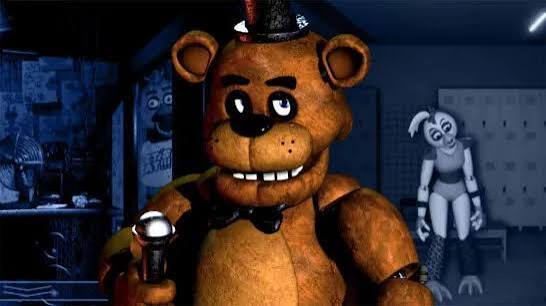
Let's talk about how FNAF actually works, because understanding the mechanics is half the battle. You're stuck in a security office at a creepy animatronic pizza place—Freddy Fazbear's Pizza. Your job? Survive five nights without the malfunctioning animatronics getting you. Sounds simple, but here's the catch: you've got limited power, a bunch of cameras to monitor, and doors that won't hold forever.
The game operates on a feedback loop that's both simple and brutally effective. You watch the cameras, you close doors when animatronics approach, you manage your power consumption—and then one mistake spirals into panic. Maybe you didn't notice Foxy moving faster than usual. Maybe you ran out of power at 4 AM. Maybe you just got unlucky. Whatever the reason, suddenly you're in survival mode, playing on pure instinct and adrenaline.
What makes this work is the pacing. The game starts manageable. You've got plenty of power, the animatronics move predictably, and you can actually catch your breath. But each subsequent night, the pressure increases. The creatures get more aggressive, power depletes faster, and your margin for error shrinks to nothing. By night five, you're basically just white-knuckling it and hoping your instincts are sharp enough to keep up.
This escalation is crucial to enjoying horror games. You want that sense of gradually mounting stakes. It's not about being scared the entire time—it's about experiencing moments of calm punctuated by moments of pure chaos.
If you're jumping into a horror game for the first time, here's the uncomfortable truth: you're probably going to fail. A lot. That's okay. The key is learning something from each failure and getting a little bit better.
Start by actually playing defensively. Don't be the person who ignores the cameras and gets ambushed in the dark. Instead, develop a rhythm. Check each camera in sequence, get familiar with the animatronics' movement patterns, and anticipate their actions. You're not trying to be a superhero—you're trying to be predictable and consistent. Panic and random reactions are your enemies.
Manage your resources like you're playing chess, not checkers. Every action drains something—power, time, your composure. Don't waste power-hungry actions on unnecessary door closures. Listen to audio cues. Pay attention to which animatronics are most dangerous during different hours. The game gives you the tools to survive; you just need to use them strategically rather than frantically.
Also, take breaks. Seriously. Horror games are mentally exhausting. If you're frustrated, stressed, or overthinking it, step away for ten minutes. These games are meant to be fun, and they stop being fun when you're burning out. Come back with fresh eyes and a clearer head.
What keeps people coming back to horror games isn't always the scares. It's the satisfaction of finally beating that impossible scenario. It's the rush of adrenaline followed by the sweet relief of making it through. It's the memorable moments—the times when everything went perfectly wrong, or perfectly right.
Horror games also create community. People love sharing their experiences, swapping strategies, and talking about that one night that absolutely destroyed them. There's something bonding about collectively experiencing something genuinely nerve-wracking.
Experiencing a horror game like FNAF doesn't require nerves of steel or a high tolerance for jump scares. It requires curiosity, patience, and a willingness to embrace the tension rather than fight it. You'll die, you'll panic, you'll probably yell at your screen at least once. But you'll also experience moments of genuine triumph, and that's what makes horror gaming special.
The beauty of horror games is that they're interactive therapy for controlled fear. You're safe behind your screen, but your body doesn't quite believe it. That's the magic. Start with one night, learn the patterns, and before you know it, you'll be staying up way too late trying to beat the next night. That's when you know you're hooked.
Give it a shot. Embrace the dread, master the mechanics, and join thousands of other players who've discovered that horror gaming is so much more than just being scared. It's about survival, strategy, and that uniquely satisfying feeling of beating the odds in the most stressful way possible.
We are a close community to help to meet and greet new people.
We are a secure community with 5000+ active members who help you with your queries, post new updates and grow your network.

Share this page with your family and friends.