Not all storage compartments are created equal, and the difference between sealed and properly ventilated units becomes obvious the moment you're storing damp clothing, sweaty workwear, or wet sports equipment for any extended period of time. Ventilation might seem like a minor design detail on paper, but it genuinely affects everything from odour control to the actual longevity of stored items and the storage furniture itself. Understanding why ventilation matters, and when it's genuinely worth prioritising, helps buyers make smarter purchasing decisions for specific storage applications across different types of workplaces and facilities. That kind of consideration rarely makes headlines on its own, but stacked across a busy facility, it becomes genuinely significant. This is exactly the type of practical consideration that separates a rushed purchase from a genuinely well-researched one.
The Problem With Sealed, Non-Ventilated Storage
Sealed storage compartments trap moisture and heat inside, creating exactly the kind of environment where unpleasant odours and even mould can develop over time, particularly when items are stored damp for extended periods between uses. This problem compounds in settings where the same items get stored daily without a chance to fully dry out between each use, such as gym kit or work uniforms used repeatedly throughout a busy week. Beyond the obvious unpleasantness, trapped moisture can also gradually damage stored items, causing fabric to deteriorate faster and potentially affecting the storage unit itself through accelerated rust or corrosion in less well-protected materials over time. Suppliers who understand this nuance tend to stand out clearly once you start comparing different options side by side. Over several years of daily use, decisions made at this stage tend to have an outsized effect on overall satisfaction.
How Ventilated Designs Solve This Problem
Ventilated storage units address this issue directly through slotted doors, perforated panels, or dedicated airflow gaps that allow air to circulate freely through each compartment even while it's fully closed and locked. This continuous airflow helps damp items dry out naturally between uses, significantly reducing the odour and moisture-related problems that plague sealed alternatives over time. The design also helps regulate temperature inside each compartment, preventing the kind of stuffy, uncomfortable heat buildup that can occur in fully sealed units during warmer weather or in poorly ventilated indoor spaces without adequate air conditioning throughout the year. It's the sort of thing that separates a facility running smoothly from one that's constantly dealing with avoidable storage complaints. It's worth revisiting this question periodically as needs shift, rather than treating it as a one-time decision made and forgotten.
Applications Where Ventilation Genuinely Matters Most
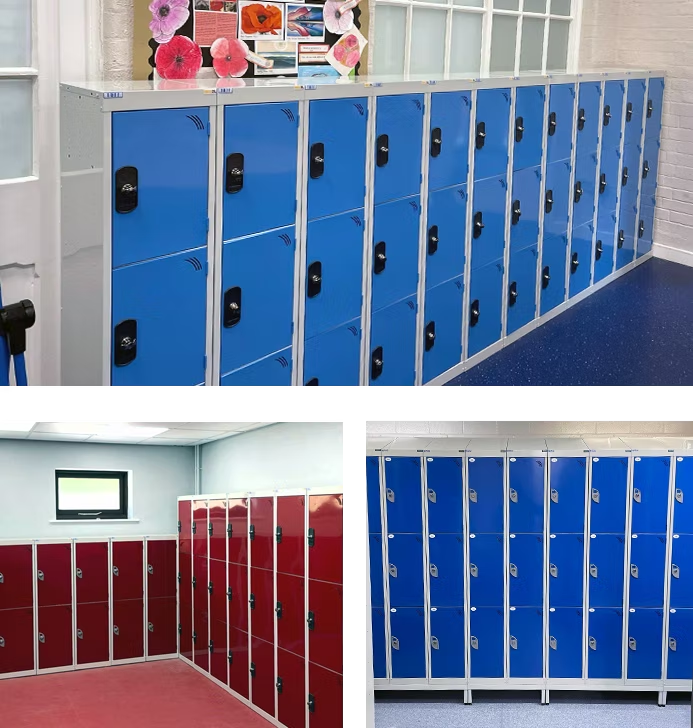
While ventilation benefits nearly any storage application to some degree, certain settings genuinely can't function properly without it as a core design requirement. Gym and sports facility changing rooms represent the most obvious example, given the near-constant presence of damp workout clothes and sweaty equipment stored throughout each day. Workplaces requiring protective clothing or uniforms, particularly in industries involving physical labour or outdoor work, also benefit enormously from ventilated storage that lets uniforms dry properly between shifts. Even schools benefit from ventilated options, particularly for storing sports kit or outdoor clothing that students bring in during wet weather throughout the school year. Bringing this up early in supplier conversations tends to save considerable back-and-forth later in the ordering process. Many facility managers say this is the factor they wish they'd weighed more carefully before placing their original order.
Balancing Ventilation With Security Considerations
Some buyers worry that ventilation slots might compromise security, creating potential access points for tampering or theft compared with fully sealed alternatives. In practice, well-designed lockers with ventilation slots maintain robust security through the same quality locking mechanisms and reinforced construction found in non-ventilated equivalents, since the ventilation openings are specifically designed to allow airflow without creating meaningful access points. Choosing a reputable manufacturer who has properly engineered this balance ensures you get the genuine benefits of ventilation without any real compromise to overall security and protection of stored belongings. This is a detail that's easy to overlook when comparing options on price alone, but it tends to matter a great deal once the storage is actually in daily use. This detail rarely shows up in a glossy brochure, but it consistently comes up in honest conversations with experienced buyers.
Making the Right Choice for Your Storage Needs
Deciding whether ventilated storage genuinely suits your specific application comes down to honestly considering what will actually be stored and how often those items will be damp or require airflow to dry out properly between uses. Settings involving regular exposure to moisture, sweat, or outdoor weather conditions almost always benefit from ventilated designs, even if the additional cost is sometimes marginally higher than fully sealed alternatives. For drier applications, like storing books, documents, or dry personal items in a typical office setting, ventilation matters less, and buyers might reasonably prioritise other features instead when making their final purchasing decision. Facility managers who take this into account early generally avoid the kind of costly surprises that crop up months after installation. That kind of incremental gain rarely makes headlines on its own, but stacked across a busy facility, it becomes genuinely significant over time.


 Search in Classifieds
 Search in Groups
 Search in Polls
 Search in Members
 Search in Members
 Search in News
 Search in Businesses
 Search in Contests
 Search in Events
 Search in Music Albums
 Search in Music Songs
 Search in Quotes
 Search in Site Team



Share this page with your family and friends.