Why Bacterial Activity Creates Unpleasant Smells
Unpleasant odors are often blamed directly on bacteria, but the science behind bad smells is more nuanced. In many cases, we do not actually smell the bacteria themselves. Instead, microorganisms can interact with organic materials and produce compounds that become airborne and detectable by our noses.
This can happen in kitchens, bathrooms, pet areas, fabrics, storage spaces, RVs, boats, and other enclosed environments. Moisture can make the situation worse because it supports microbial activity and can contribute to persistent musty odors.
The U.S. Environmental Protection Agency (EPA) explains that microorganisms and their by-products can be part of indoor environments, while moisture plays an important role in microbial growth.
Understanding why does bacteria smell bad helps explain why simply covering unpleasant smells with fragrance may not provide a lasting solution. Effective odor removal in the home starts with identifying the source and addressing the conditions that allow odors to develop.
What Actually Causes Bacterial Odors?
Bacteria are microscopic organisms, but the smells associated with bacterial activity generally come from substances produced during their metabolic processes.
When microorganisms break down organic materials such as food residue, sweat, oils, waste, or other biodegradable matter, they can release various compounds. Some of these compounds are volatile, allowing them to move into the surrounding air.
The resulting odor depends on the microorganisms involved, the material being broken down, and the environmental conditions.
Other microorganisms can produce noticeable odors as well. For example, the EPA explains that certain compounds produced by mold are volatile and are known as microbial volatile organic compounds (mVOCs). These compounds can contribute to the musty smell commonly associated with mold growth.
This is why a better understanding of bacterial odors requires looking at the entire process rather than assuming that bacteria themselves simply “smell bad.”
How Microbial Activity Creates Unpleasant Smells
Microorganisms need suitable conditions and nutrients to remain active. Organic residue can provide an available food source, while moisture can create an environment that supports microbial activity.
Consider food residue left on a kitchen surface. As microorganisms interact with that material, metabolic processes can produce compounds that eventually become noticeable as an unpleasant smell.
Similar processes can occur with sweat and body oils trapped in fabrics, damp camping equipment, pet-related residue, garbage, and other organic materials.
A simplified explanation is:
Organic material → microbial activity → metabolic by-products → volatile compounds → perceived odor
Not every unpleasant smell is bacterial, however. Cooking, smoke, chemical products, sewage, mold, and other sources can create odors through different processes.
For this reason, successful odor removal in the home begins by identifying what is actually producing the smell rather than assuming every odor has the same cause.
Why Moisture Can Make Odors Worse
Moisture is one of the most important factors to consider when dealing with persistent household and outdoor odors.
Damp fabrics, condensation, leaks, wet clothing, poorly ventilated bathrooms, and humid storage areas can create conditions that encourage microbial growth. The EPA identifies moisture control as a key part of mold prevention and recommends keeping indoor relative humidity below 60%, ideally between 30% and 50%.
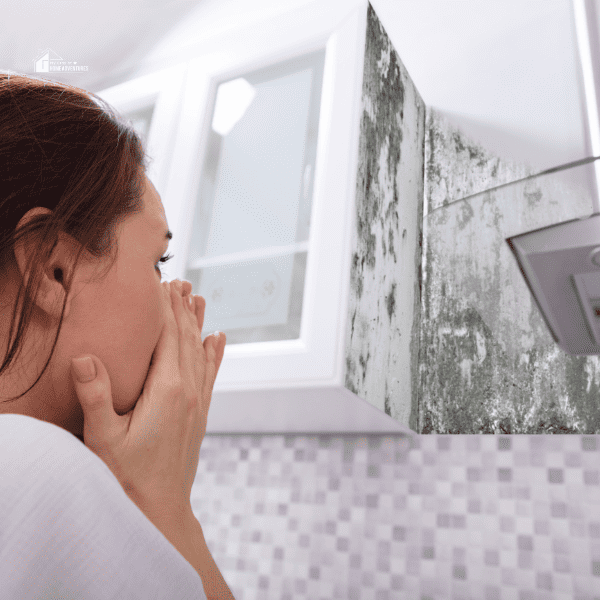
A musty smell can sometimes provide an important clue. According to the EPA, mold can produce mVOCs with strong or unpleasant odors, and a moldy odor should prompt an investigation for possible mold growth.
This means homeowners should not simply spray fragrance over a persistent musty smell. If moisture, leaks, or visible mold are present, those underlying problems need to be addressed.
Where Bacterial and Microbial Odors Commonly Develop
Odor-producing conditions can occur throughout a property because organic materials and moisture are found in many everyday environments.
In the Home
Common odor-prone areas include:
- Kitchens and garbage areas
- Bathrooms and laundry rooms
- Pet areas
- Carpets and upholstery
- Damp storage spaces
- Bedding and frequently used fabrics
Food residue, pet materials, moisture, and accumulated organic debris can all contribute to unpleasant smells.
In RVs and Boats
Recreational vehicles and boats can face additional challenges because they contain enclosed compartments, fabrics, upholstery, storage areas, and other spaces where airflow may be limited.
Fresh Tent identifies trapped moisture, organic residue, body odor, pet odors, and other sources as common contributors to RV and boat odors.
This is why odor management should focus on both the environment and the source.
Why Odor Masking Isn't Enough
Traditional air fresheners often work by introducing another fragrance into the environment. This may temporarily change how a room smells, but it does not necessarily address the compound or material responsible for the original odor.
For example, if a damp carpet has developed a musty smell, adding a strong fragrance does not remove the moisture or investigate what is causing the odor. Similarly, fragrance cannot replace cleaning when food residue or pet-related organic material is responsible.
A source-focused approach is different:
|
Odor Masking
|
Source-Focused Odor Control
|
|
Adds another scent
|
Addresses the odor source
|
|
May provide temporary freshness
|
Focuses on longer-lasting control
|
|
Original odor may remain
|
Targets odor-causing conditions
|
|
Relies heavily on fragrance
|
Can reduce dependence on heavy fragrance
|
Fresh Tent promotes odor elimination rather than simply masking smells with fragrances. Its product range is designed for RVs, boats, tents, camping gear, and other outdoor environments.
For homeowners, this same principle can be applied to odor removal in the home: identify the source first, then choose an appropriate odor-control method.
The Role of Oxidation in Odor Control
Some odor-control technologies work by changing odor-causing compounds rather than simply covering them.
Oxidation is one approach. In simple terms, an oxidizing process can alter the molecular structure of certain compounds, which can reduce or change their characteristic odor.
Fresh Tent describes molecular odor elimination as part of its technology and identifies chlorine dioxide (ClO₂) as an oxidizing agent used in its odor-control products.
The basic concept can be represented as:
Odor-causing compound → oxidation → molecular change → reduced odor
However, odor treatment should not be considered a substitute for cleaning, moisture control, or source removal. If a leak, mold problem, food residue, or other physical source remains, that source still needs attention.
Practical Ways to Reduce Unpleasant Odors at Home
Understanding the science is useful, but homeowners also need practical ways to prevent odors from returning.
Remove Organic Residue
Clean food spills, garbage, pet-related residue, and other organic materials promptly. Removing the potential food source can help reduce conditions that contribute to microbial odors.
Control Moisture
Repair leaks, dry damp materials, and manage humidity. The EPA recommends maintaining indoor humidity below 60%, with 30%–50% considered an ideal range.
Improve Ventilation
Proper ventilation can help reduce stagnant air and control moisture in areas such as kitchens and bathrooms.
Clean Odor-Prone Fabrics
Carpets, upholstery, bedding, curtains, towels, and pet fabrics can retain organic residue. Regular cleaning can help prevent odors from becoming embedded.
Investigate Persistent Smells
If a smell continues after cleaning, look for hidden sources such as moisture behind furniture, damp storage areas, drains, pet spaces, or mold.
These simple practices form the foundation of effective odor removal in the home.
How Fresh Tent Supports Source-Based Odor Control
Fresh Tent takes a source-focused approach to odor management. Its product range addresses different environments, including RVs, boats, tents, camping gear, cabins, and enclosed spaces.
The basic philosophy is straightforward: instead of simply making an unpleasant smell less noticeable, identify the conditions producing it and use an appropriate solution to address the odor. For homeowners, this can complement a broader routine of cleaning, moisture management, ventilation, and regular maintenance.
Fresh Tent's home and vacation-property resources also address common odors associated with smoke, cooking, pets, mustiness, and stale indoor environments.
This makes the brand relevant to both outdoor odor control and everyday household freshness.
Featured Product: Fresh Tent Large Space Deodorizing Kit
Some odor problems affect an entire enclosed area rather than a single surface. This can occur in RVs, boats, cabins, cottages, and other spaces that remain closed for extended periods.
The Fresh Tent Large Space Deodorizing Kit is designed for enclosed spaces that can be closed off during treatment. According to the product information, the kit is intended for spaces of at least 50 square feet that can be kept away from people, plants, and pets during treatment.
The kit includes a dispenser jar, two 20-gram tablets, a bubbler, “DO NOT ENTER” signage, and safety-handling documentation. Fresh Tent provides different tablet quantities depending on the size of the space being treated.
The product is positioned for situations involving:
- Musty RVs
- Boats and cabin cruisers
- Vacation cottages
- Smoke odors
- Cooking odors
- Pet and body odors
- Other persistent enclosed-space odors
Fresh Tent's product page emphasizes that the treatment is for unoccupied spaces and provides specific safety instructions. Users should carefully follow the supplied directions and safety documentation before, during, and after treatment.
This makes the Large Space Deodorizing Kit a targeted option for situations where ordinary fragrance-based products are not appropriate for the scale or persistence of the odor problem.
Understanding Why Bacteria Smell Helps You Control Odors
So, why do bacteria smell bad? In many situations, the answer is not that bacteria themselves have a smell. Instead, microbial activity can produce compounds that become airborne and are perceived as unpleasant odors.
Moisture and organic material can contribute to the conditions that allow these processes to occur. That is why effective odor removal in the home should combine source identification, cleaning, moisture control, ventilation, and appropriate odor-control solutions.
Fresh Tent provides products designed around source-focused odor management, including the Large Space Deodorizing Kit for suitable unoccupied enclosed spaces.
By understanding where odors come from and addressing those sources instead of simply covering them, homeowners, RV owners, and boat owners can create fresher environments with a more thoughtful approach to odor control.
FAQs Section:
1. Why does bacteria smell bad?
The smell associated with bacteria generally comes from compounds produced during microbial activity rather than from the bacteria themselves.
2. What causes bacterial odors at home?
Organic residue, food, sweat, pet materials, waste, damp fabrics, and other materials can contribute to microbial odor development.
3. Does odor masking eliminate bad smells?
Not necessarily. Masking changes the perceived scent but may leave the original odor source untouched.
4. How can I improve odor removal in the home?
Identify the source, clean affected areas, control moisture, improve ventilation, and use an appropriate odor-control solution when needed.
5. What is the Fresh Tent Large Space Deodorizing Kit used for?
It is designed for suitable enclosed spaces such as RVs, boats, cabins, and cottages that can be unoccupied during treatment.


 Search in Classifieds
 Search in Groups
 Search in Polls
 Search in Members
 Search in Members
 Search in News
 Search in Businesses
 Search in Contests
 Search in Events
 Search in Music Albums
 Search in Music Songs
 Search in Quotes
 Search in Site Team



Share this page with your family and friends.