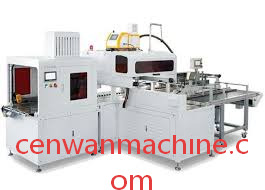
How do you choose a Box Folder Gluer Machine for your packaging business? This decision involves several factors, including carton structure, board material, production requirements, machine configuration, factory space, and operator needs. A machine designed for one packaging application may not be suitable for another because different cartons can require different feeding, folding, gluing, and delivery arrangements. For packaging manufacturers exploring suitable equipment, cenwanmachine provides folder gluing solutions covering cardboard boxes, corrugated packaging, stereo boxes, and other carton applications, giving buyers a practical starting point when comparing equipment for their own production requirements.
The carton structure should be one of the first factors considered. Packaging manufacturers may produce straight-line boxes, lock-bottom cartons, multi-corner structures, stereo boxes, or other folding formats. Each design has its own folding path, glue position, and forming requirements, so the machine configuration needs to match the actual carton design. A company producing mainly straight-line cartons may have different equipment requirements from a factory handling several folding structures. Reviewing the box drawing before choosing machinery can help clarify which folding sections and functions are required.
Material compatibility is also closely connected with machine selection. Paperboard and corrugated board can vary in thickness, stiffness, surface treatment, and folding characteristics. Some packaging applications use relatively light carton stock, while others require stronger corrugated materials. The feeding system needs to handle the selected board consistently, while the folding and gluing sections must work with the physical characteristics of the material. Buyers should provide detailed material information to the supplier so that the machine configuration can be discussed according to the actual production conditions.
Box dimensions are another important consideration. Packaging factories may produce small cartons for cosmetics, household products, or retail goods, while other orders can involve larger boxes for industrial or transportation purposes. The working range of the machine needs to correspond with the dimensions of the carton blanks. If a company handles different box sizes, adjustment flexibility becomes particularly useful. Before placing an order, buyers can provide sample drawings and size ranges so that the supplier can evaluate whether the selected configuration corresponds with the intended applications.
Production volume should also be considered carefully. A factory serving several customers may have frequent changes between carton styles, while another manufacturer may concentrate on longer production runs with fewer product changes. These two situations can require different machine arrangements. Feeding speed, machine width, folding sections, compression units, adjustment methods, and automation level should be considered together rather than evaluated separately. Understanding the normal production pattern can help buyers select equipment that fits their daily workflow.
Automation can influence the way a packaging line operates. A folder gluer can connect feeding, folding, gluing, compression, and delivery into a continuous process, reducing the need for repeated manual handling. However, automation should be selected according to the actual production environment. Buyers should consider operator availability, product change frequency, carton structure, production volume, and available factory space. A suitable level of automation should support the production process without creating unnecessary complexity for operators.
The feeding section deserves particular attention because carton blanks need to enter the machine in a stable position. If the feeding process is inconsistent, alignment can be affected during subsequent folding and gluing stages. When comparing different machines, buyers should ask how the feeding system handles their actual carton materials and dimensions. Testing with representative samples can provide useful information about how the equipment performs under conditions similar to the planned production environment.
The gluing system is another essential part of the selection process. Different carton structures can require different glue positions and application methods. A straight-line carton may have a different adhesive arrangement from a lock-bottom box, while a special carton can require additional folding and gluing considerations. The machine needs to maintain suitable alignment as the blank moves through the folding section so that adhesive reaches the intended area. Discussing the glue type, application position, and carton structure with the supplier can help determine an appropriate configuration.
Machine adjustment should not be overlooked, especially for manufacturers handling multiple orders. When carton sizes or structures change, operators may need to adjust guides, folding sections, glue positions, or other components. An equipment configuration that allows practical adjustment can make production changes easier to manage. Buyers should therefore ask about the changeover process and determine whether the adjustment method fits the type of work carried out in their factory.
Factory conditions can also influence the final choice. Before ordering equipment, manufacturers should review available floor space, material storage, operator access, maintenance areas, and the position of related packaging equipment. The machine should fit naturally into the production line rather than creating unnecessary movement for workers or materials. Electrical requirements, installation conditions, ventilation, and access for maintenance can also be discussed with the supplier before delivery.
Maintenance and technical service are worth considering alongside machine specifications. A folder gluer contains mechanical, electrical, feeding, folding, and gluing sections that need regular inspection and care. Operators should understand routine cleaning, adjustment, lubrication where applicable, and basic troubleshooting procedures. Technical training can help production staff become familiar with the machine before regular operation begins. For overseas buyers, communication during installation and after delivery can also be an important part of equipment selection.
CenWan provides folder gluer equipment for various packaging applications and offers technical communication for customers evaluating different machine configurations. The company works with cardboard and corrugated packaging applications and also provides customization options for selected requirements. When a buyer has a special carton structure, discussing the unfolded drawing, material characteristics, dimensions, folding sequence, glue position, and production requirements with the technical team can provide a clearer basis for selecting suitable machinery.
Customization can be particularly useful when a standard configuration does not fully match a packaging project. A manufacturer may require a specific working width, feeding arrangement, folding unit, or other machine feature because of the carton design. Rather than selecting equipment based only on a general specification, buyers can explain the actual production situation and discuss whether certain functions can be adjusted. This approach can make the equipment selection process more closely connected with the packaging products that will be produced.
It is also useful to compare machines according to the complete production process rather than focusing on one specification. A listed production speed does not explain how the equipment will perform with every carton structure or material. Buyers should consider speed together with feeding stability, folding accuracy, gluing requirements, changeover procedures, operator access, and maintenance arrangements. Looking at these factors together provides a clearer picture of how the machine may fit into the production line.
Before contacting a machinery supplier, buyers can prepare several pieces of technical information. A carton drawing, unfolded dimensions, board material, thickness, folding sequence, glue position, box style, production requirements, and expected changeover frequency can all help the supplier understand the application. Physical samples can also be useful when the packaging structure is difficult to explain through drawings alone. With this information available, technical discussions can focus on the actual production task instead of relying on general assumptions.
For packaging manufacturers planning to improve carton production or handle different box structures, choosing suitable equipment starts with understanding the actual requirements of the packaging line. A suitable Folder Gluer Machine should correspond with the carton design, material, working range, folding process, gluing method, and production conditions, while reliable technical communication can make equipment selection easier. With practical folder gluing solutions and customization support for different packaging applications, cenwanmachine can be explored at https://www.cenwanmachine.com/product by manufacturers looking for suitable equipment and professional information for their carton production projects.


 Search in Classifieds
 Search in Groups
 Search in Polls
 Search in Members
 Search in Members
 Search in News
 Search in Businesses
 Search in Contests
 Search in Events
 Search in Music Albums
 Search in Music Songs
 Search in Quotes
 Search in Site Team





 Loading ...


Share this page with your family and friends.