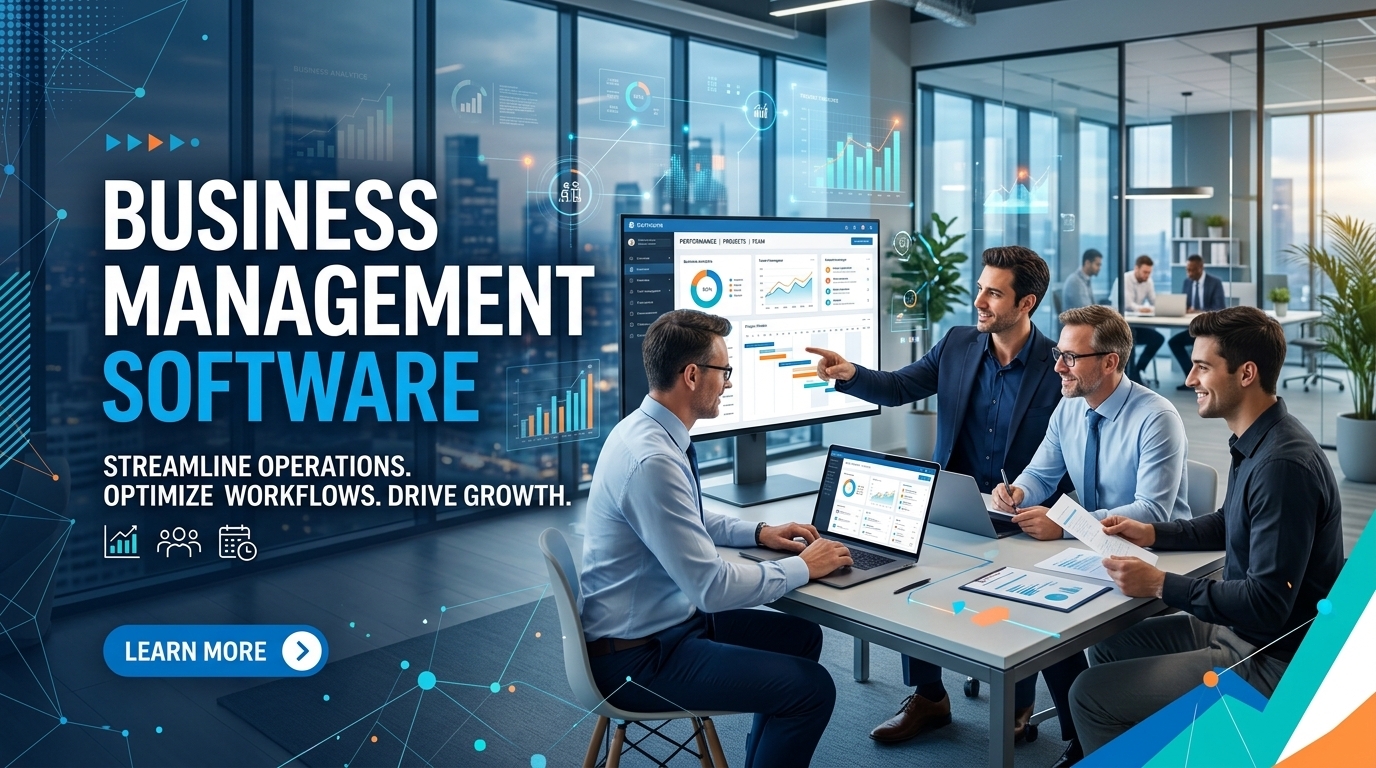
Businesses in 2026 are managing more complex operations than ever before. Companies need to handle customer relationships, employee management, financial activities, project workflows, and daily operations while maintaining accuracy and efficiency. To manage these responsibilities effectively, many organizations are adopting Business Management Software that combines different business functions into a single digital platform.
The growing adoption of Business Management Software is changing how companies organize their operations. Instead of using separate systems for CRM, human resources, and finance, businesses are moving toward integrated cloud based platforms that connect different departments. These systems provide better visibility, improve collaboration, and help decision makers access important information from one centralized location.
Growing Need for Cloud Based Business Management Software
Modern businesses generate large amounts of information every day. Customer records, employee details, financial transactions, inventory updates, and operational reports all contribute to business performance.
Managing this information through separate tools can create challenges such as
- Data duplication
- Communication gaps between departments
- Delayed reporting
- Manual administrative work
- Limited business visibility
Cloud based business management platforms help solve these challenges by connecting different business activities through one system. Employees and managers can access updated information while improving coordination between departments.
What Is Business Management Software
Business Management Software is a digital solution that helps organizations manage multiple business processes through a unified platform. It allows companies to organize, monitor, and improve daily operations by bringing different functions together.
A complete business management system may include tools for
- Customer relationship management
- Human resources
- Financial management
- Sales management
- Project tracking
- Inventory control
- Reporting and analytics
- Workflow automation
The main purpose of these systems is to create a structured environment where businesses can manage operations more effectively.
How Cloud Technology Supports Modern Businesses
Cloud technology has changed how organizations store and access business information. Traditional software often required local installation and maintenance, while cloud based systems allow businesses to access applications through secure online platforms.
Cloud based business management solutions provide several capabilities.
Remote Accessibility
Employees can access business information from different locations using computers, tablets, or mobile devices. This supports flexible working environments and improves collaboration between teams.
Automatic Updates
Cloud platforms receive regular updates without requiring complex manual installations. This allows businesses to use improved features while reducing maintenance efforts.
Scalable Operations
As businesses grow, their technology requirements also increase. Cloud systems allow organizations to add users, features, and data capacity according to changing needs.
Data Protection
Cloud based systems usually include security features such as user permissions, authentication controls, and data backup options to help protect business information.
Role of CRM Tools in Business Management Software
Customer relationships are an important part of business growth. CRM tools within business management platforms help organizations organize customer information and improve communication.
CRM features allow businesses to manage
- Customer profiles
- Sales opportunities
- Communication history
- Customer requests
- Lead tracking
- Sales performance
By connecting CRM with other business functions, companies can understand customer activities alongside financial and operational information.
For example, sales teams can review customer interactions while finance teams can monitor related transactions. This connected approach improves coordination between departments.
Importance of HR Tools in Business Management Systems
Human resource management involves many responsibilities, including employee records, attendance tracking, payroll management, and performance monitoring.
HR tools integrated into Business Management Software help organizations manage employee information more efficiently.
Common HR capabilities include
- Employee database management
- Attendance monitoring
- Leave management
- Payroll information
- Recruitment tracking
- Performance evaluation
By digitizing HR processes, businesses can reduce administrative tasks and maintain more organized employee records.
Finance Management Features for Better Business Control
Financial management is one of the most important functions of any organization. Accurate financial information helps businesses monitor performance, control expenses, and plan future activities.
Business management platforms with finance tools can support
| Finance Function |
Business Use |
| Accounting |
Recording financial transactions |
| Budget Management |
Planning and controlling expenses |
| Reporting |
Reviewing financial performance |
| Invoicing |
Managing customer payments |
| Expense Tracking |
Monitoring business costs |
| Forecasting |
Supporting future planning |
When finance tools are connected with other departments, businesses gain a clearer understanding of overall performance.
How Integrated Business Software Improves Operations
Many organizations struggle when departments use disconnected systems. Information may need to be transferred manually between platforms, creating delays and increasing the possibility of errors.
Integrated Business Management Software creates a connected environment where different departments can work with consistent information.
For example
- Sales data can connect with finance reports
- Employee records can connect with payroll processes
- Customer information can support service improvements
- Operational data can support management decisions
This integration improves efficiency and helps businesses maintain better control over their activities.
Benefits of Using Cloud Based Business Management Software
Organizations adopt cloud based business systems because they provide several operational advantages.
Improved Data Visibility
Managers can access updated information from different departments through centralized dashboards and reports.
Better Collaboration
Teams can work with shared information, reducing communication gaps and improving coordination.
Reduced Manual Processes
Automation reduces repetitive administrative tasks and allows employees to focus on more important activities.
Faster Decision Making
Real time access to business information helps leaders make decisions based on current data.
Better Business Planning
Accurate reports support budgeting, forecasting, and long term planning.
Industries Using Business Management Software
Businesses across different industries are adopting integrated management platforms to improve operational control and maintain better coordination between departments. Although every industry has different requirements, the need for organized data management and efficient workflows remains common.
Some industries using Business Management Software include
| Industry |
Common Uses |
| Retail |
Customer management, sales tracking, inventory control |
| Healthcare |
Patient records, staff management, financial reporting |
| Manufacturing |
Production planning, supply chain management, employee tracking |
| Education |
Student records, administration, financial management |
| Real Estate |
Customer management, property records, financial activities |
| Logistics |
Fleet management, operations tracking, reporting |
| Professional Services |
Project management, client records, billing |
By using integrated systems, organizations can manage daily operations more effectively while improving communication between teams.
Features Businesses Should Consider in 2026
As business requirements continue changing, organizations need software solutions that can support flexibility, automation, and future growth. When selecting a business management platform, companies should consider several important features.
CRM Integration
A strong CRM system helps businesses manage customer relationships, track sales activities, and maintain communication records. Integration with other departments creates a complete view of customer interactions and business performance.
HR Management Capabilities
Modern businesses require efficient employee management tools. HR features should support employee records, attendance, payroll information, and workforce planning.
Financial Management Tools
Finance features should help businesses monitor transactions, prepare reports, manage budgets, and maintain accurate financial records.
Reporting and Analytics
Data plays an important role in decision making. Reporting tools allow businesses to analyze performance, identify trends, and understand operational results.
Workflow Automation
Automation helps reduce repetitive tasks and improves efficiency. Businesses can automate approvals, notifications, reporting processes, and administrative activities.
Mobile Accessibility
Employees and managers increasingly need access to business information while working remotely or traveling. Mobile friendly platforms support flexible access to important tools and reports.
Security Considerations for Business Management Software
Business systems contain valuable information related to customers, employees, finances, and operations. Protecting this information is an important requirement for organizations.
Important security practices include
- User access management
- Data encryption
- Secure authentication
- Regular backups
- Activity monitoring
- Permission controls
A secure software environment helps businesses maintain data confidentiality and reduce operational risks.
Role of Automation in Business Management Systems
Automation is becoming an important part of modern business operations. Companies are using technology to reduce manual work and improve accuracy across different processes.
Business management platforms can automate activities such as
- Invoice processing
- Employee notifications
- Customer follow ups
- Report generation
- Data updates
- Approval workflows
Automation allows employees to spend more time on strategic activities while improving overall operational efficiency.
Future Trends of Business Management Software in 2026
The development of business technology continues to influence how organizations manage their operations. In 2026, several trends are expected to shape the future of business management platforms.
Artificial Intelligence Integration
AI features are becoming more common in business software. Artificial intelligence can support data analysis, automated recommendations, customer service, and workflow improvements.
Advanced Business Analytics
Organizations are focusing more on understanding performance through data. Advanced analytics tools help businesses identify trends and make better decisions.
Greater Cloud Adoption
More companies are moving toward cloud based systems because they provide flexibility, scalability, and easier access to business information.
Improved Collaboration Tools
Businesses require better communication between departments. Integrated collaboration features help teams share information and manage workflows more effectively.
Personalized Business Platforms
Future systems are expected to provide more customized experiences based on business requirements, industry needs, and user preferences.
How Business Management Software Supports Growth
Growth creates new challenges for organizations. As companies expand, they need better ways to manage customers, employees, finances, and daily activities.
Business Management Software provides a structured approach by connecting important business functions. It allows companies to monitor performance, improve processes, and maintain better control as operations become more complex.
Instead of managing separate tools, businesses can use an integrated platform that supports multiple departments through one connected system.
Final Thought
The increasing adoption of Business Management Software shows how organizations are changing the way they manage daily operations in 2026. Cloud based platforms that combine CRM, HR, and finance tools help businesses create better coordination, improve reporting, and access important information more efficiently. As companies continue adopting digital solutions, integrated business management systems will play an important role in supporting automation, collaboration, and smarter decision making. Businesses that focus on organized data management and connected workflows will be better prepared to handle future operational challenges and changing market requirements.


 Search in Classifieds
 Search in Groups
 Search in Polls
 Search in Members
 Search in Members
 Search in News
 Search in Businesses
 Search in Contests
 Search in Events
 Search in Music Albums
 Search in Music Songs
 Search in Quotes
 Search in Site Team



Share this page with your family and friends.