Search in Classifieds
Search in Groups
Search in Polls
Search in Members
Search in Members
Search in News
Search in Polls
Search in Businesses
Search in Contests
Search in Events
Search in Music Albums
Search in Music Songs
Search in Quotes
Search in Site Team
Search in Jobs
Search in Products
Search in Products
7 minutes, 45 seconds
-98 Views 0 Comments 0 Likes 0 Reviews
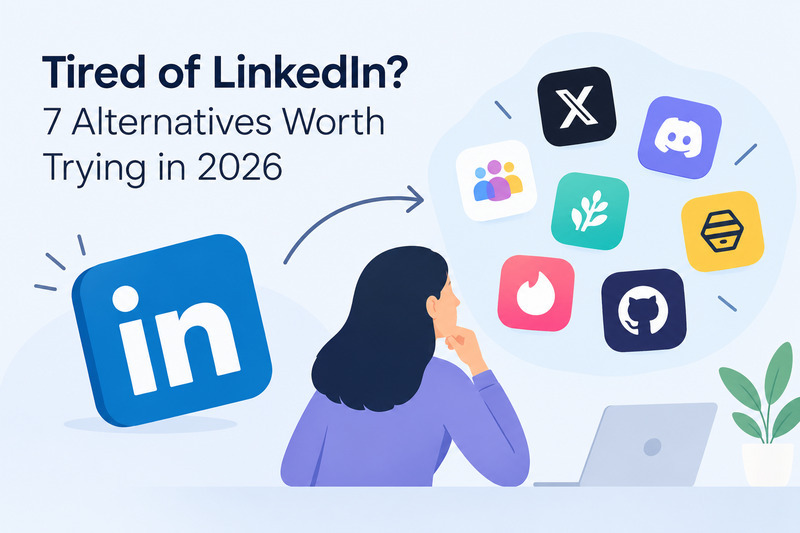
LinkedIn still works, and for most careers it's not going anywhere soon. But plenty of people are tired of it anyway. The feed has filled up with recycled advice, humblebrag posts dressed up as lessons learned, and content that reads like it was written to please an algorithm rather than a person. If you've been scrolling and thinking there has to be a better way to network or job hunt, you're not wrong. There are several solid alternatives, and each one is better suited to a different kind of professional.
The complaints are pretty consistent. Organic reach on LinkedIn has dropped, so fewer people see your posts unless you pay or post constantly. Recruiter messages can feel like spam. And the platform tries to be everything at once, a resume, a content feed, a job board, and a sales tool, which means none of those functions feel especially focused anymore.
None of the options below fully replace LinkedIn. What they do is handle one job better, whether that's finding a role, building a niche community, or meeting people in person. For a broader roundup, check out this top linkedIn alternatives list.
If your main goal is finding a job, Indeed is hard to beat for sheer volume. It pulls listings from company sites and job boards across nearly every industry, and it's free for job seekers. It doesn't offer much in the way of networking or personal branding, so think of it as a search engine for jobs rather than a place to build relationships.
Formerly AngelList Talent, Wellfound is built for startup jobs. Listings usually show salary and equity upfront, which saves time compared to platforms where that information is buried or missing entirely. It's a smaller pool than LinkedIn, so it works best if you're specifically targeting early-stage companies rather than large enterprises.
Bluesky has grown into a genuine alternative for people who want to build a professional presence without paying for reach. It's decentralized, so your visibility depends more on who follows you than on how much you post or whether you've upgraded to a paid tier. It isn't a job board and doesn't have LinkedIn's structured profile format, so it suits people who mainly want to share ideas and connect with others in their field.
Not every professional connection needs to start online. Meetup organizes local and virtual events around shared interests, from industry meetups to hobby groups that happen to be full of people in your field. It's free to attend, though organizers pay a monthly fee to run groups. If you find LinkedIn messages easy to ignore, an in-person conversation tends to stick better.
Contra is built specifically for freelancers and independent professionals. It works like a portfolio and client-matching platform in one, without charging commission on the work you land. If your career runs on projects and clients rather than a single employer, it's worth a look over LinkedIn's more traditional, resume-first format.
The Dots is aimed at creative professionals, including designers, writers, and marketers. It leans on visual portfolios rather than text-heavy profiles, which makes sense for work that's easier to show than describe. It's a smaller platform than LinkedIn, but the audience is more concentrated, which can mean more relevant connections.
Alignable focuses on local business networking and referrals. It's especially useful for small business owners, consultants, and service providers who rely on word-of-mouth within their community. Instead of a global feed, you get a network centered on people nearby who might actually refer you work.
Match the platform to what you actually need, not to what's trending. A few questions help narrow it down:
Are you job hunting right now? Indeed or Wellfound will serve you better than a general networking app.
Do you want visibility without paying for reach? Bluesky is worth trying.
Is most of your work project-based? Contra or The Dots fit that better than a traditional profile.
Do you run a local business? Alignable is built for exactly that.
Do you just want real conversations instead of scrolling? Start with Meetup.
You don't have to pick just one. Many professionals keep LinkedIn active for visibility while using one or two of these for the specific thing LinkedIn doesn't do well.
None of these platforms have LinkedIn's scale. If your goal is maximum visibility to recruiters and a broad professional audience, LinkedIn is still the default for a reason. But if you're tired of the noise, or your work simply doesn't fit its one-size-fits-all format, these alternatives can genuinely serve you better for a specific purpose. Try one that matches what's actually missing from your current routine, rather than switching everywhere at once.
Q. Is there a real alternative to LinkedIn?
Ans. Not a single one that replaces it entirely. Each alternative on this list does one part of LinkedIn's job better, whether that's job search, freelancing, or local networking.
Q. Which LinkedIn alternative is best for job seekers?
Ans. Indeed offers the widest range of listings, while Wellfound is better if you specifically want startup roles.
Q. Is Bluesky good for professional networking?
Ans. It's growing as an option for building an audience and sharing ideas, though it doesn't have LinkedIn's structured profiles or job tools yet.
linkedin alternatives professional networking sites job search platforms networking apps
We are a close community to help to meet and greet new people.
We are a secure community with 5000+ active members who help you with your queries, post new updates and grow your network.

Share this page with your family and friends.